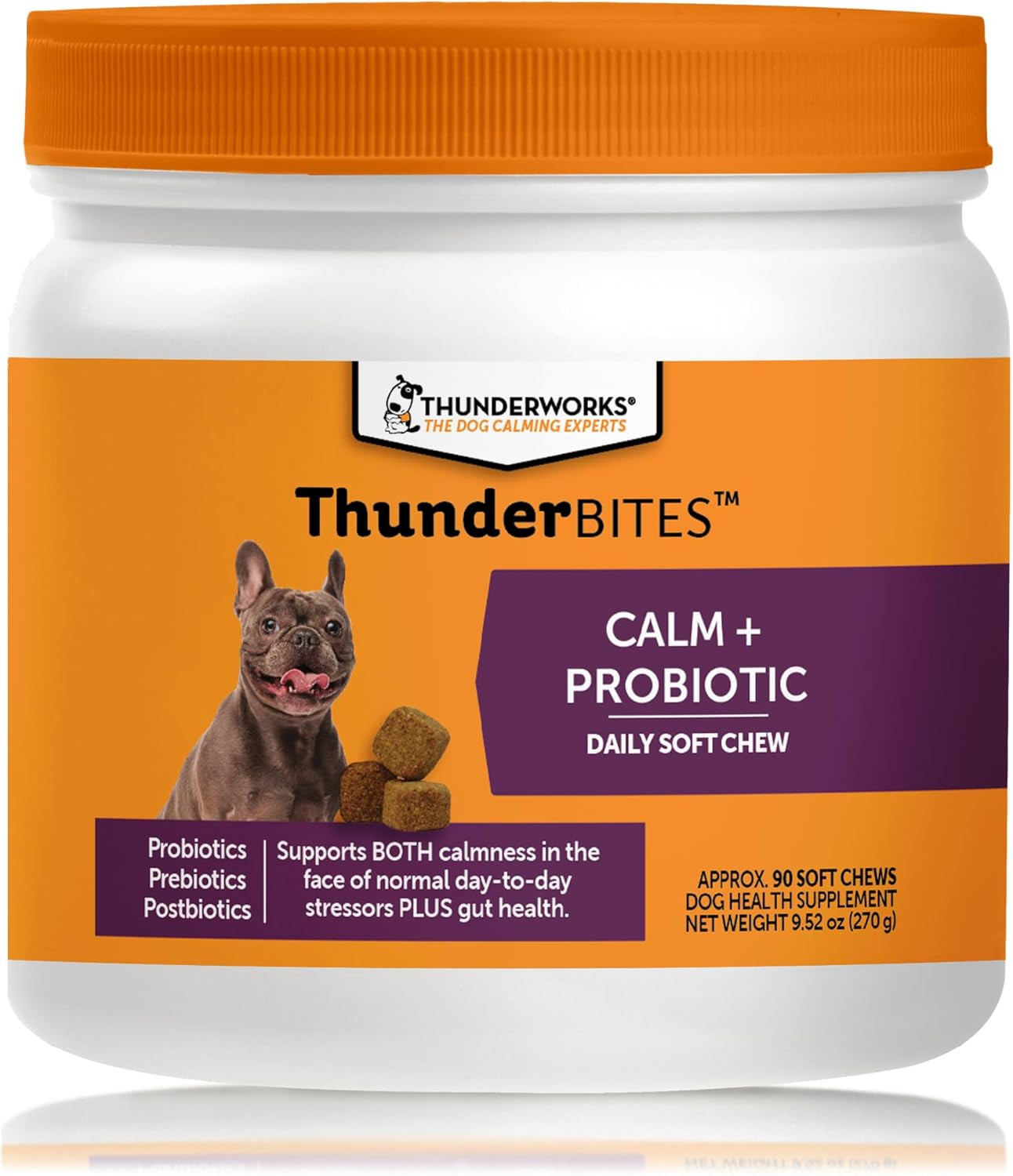
Why Australian Shepherds Get Vet Visit Anxiety
Australian Shepherds are bred to work all day and make decisions independently. When under-stimulated, they develop anxiety that presents as obsessive behaviors — chasing shadows, excessive barking, spinning. Their anxiety is often energy-driven rather than fear-driven, which means exercise is as important as supplementation.

Vet-visit anxiety is anticipatory — many dogs start showing stress from the car ride to the clinic. The combination of unfamiliar smells, other animals, restraint, and medical procedures creates a peak-stress environment.
Australian Shepherd Dosing Guide
| Weight Range | Daily Dose | Notes |
|---|---|---|
| Up to 25 lbs | 1 chew | Minimum dose |
| 26–50 lbs | 2 chews | With morning meal |
| 51–75 lbs | 3 chews | Split AM/PM if needed |
| 40–65 lbs (Australian Shepherd) | 2 chews | Give with morning meal |
At 40–65 lbs, Australian Shepherds take 2 chews daily. Give with morning meal before the day's activity, not at night — melatonin can make an evening dose counterproductive for active breeds.
Step-by-Step Protocol for Vet Visit Anxiety
Timing: 45–60 min before appointment
Give dose 45–60 minutes before leaving for the vet. Visit the clinic for 'happy visits' (no procedures, just treats) in the weeks before. Ask for a Fear Free certified vet if available.
Stack with: Fear Free protocol, ThunderShirt, high-value treats at the clinic
Palatability & Administration for Australian Shepherds
Good — food motivated, but some Aussies are picky about texture.
If your Australian Shepherd refuses the chew, try these approaches in order: hand-feed as a treat → crumble over wet food → wrap in a small piece of deli turkey or pill pocket → warm for 4 seconds in microwave to enhance aroma. Most dogs accept ThunderBites within the first few days of consistent offering.
Gut Health Benefit for Australian Shepherds
Australian Shepherds are generally robust digestion, some grain sensitivity. The pre-, pro-, and postbiotic complex in ThunderBites addresses this directly. Allow 2–3 weeks for the probiotic component to fully establish — digestive improvements are typically visible by day 14–21 of consistent daily use.
The gut-brain axis connection in dogs is well established: dogs with healthier gut microbiomes tend to show lower baseline cortisol and better stress resilience. For breeds with digestive sensitivity, the combined calming + gut-health approach in ThunderBites offers advantages over single-ingredient calming supplements.
When ThunderBites Isn’t Enough
Ask your vet about pre-visit gabapentin or trazodone for dogs with extreme vet phobia — it's commonly prescribed and safe to combine with ThunderBites.
ThunderBites works best for mild to moderate vet visit anxiety. Signs that you need veterinary escalation: inability to eat or drink during anxious periods, self-injury, sustained vocalization (more than 2 hours), or regression in house training. Always rule out pain or medical causes for sudden anxiety onset in previously calm dogs.
Frequently Asked Questions
How many ThunderBites chews should I give my Australian Shepherd?
At 40–65 lbs, Australian Shepherds take 2 chews daily. Give with morning meal before the day's activity, not at night — melatonin can make an evening dose counterproductive for active breeds.
When should I give ThunderBites for vet visit anxiety?
45–60 min before appointment. Vet-visit anxiety is anticipatory — many dogs start showing stress from the car ride to the clinic. The combination of unfamiliar smells, other animals, restraint, and medical procedures creates a peak-stress environment.
Is ThunderBites safe for Australian Shepherds to take every day?
Yes. The formula is designed for daily use in healthy adult dogs. The probiotic component in particular benefits from consistent daily supplementation. Consult your vet before starting if your Australian Shepherd has any health conditions or is on medication.
How long before I see results?
Acute calming effect: 30–60 minutes after dosing. Reduction in baseline anxiety: 1–3 weeks of daily use. Full probiotic benefit: 3–4 weeks. If you see no improvement after 4 weeks, consult your veterinarian.