What in the chew actually calms (and what does not)
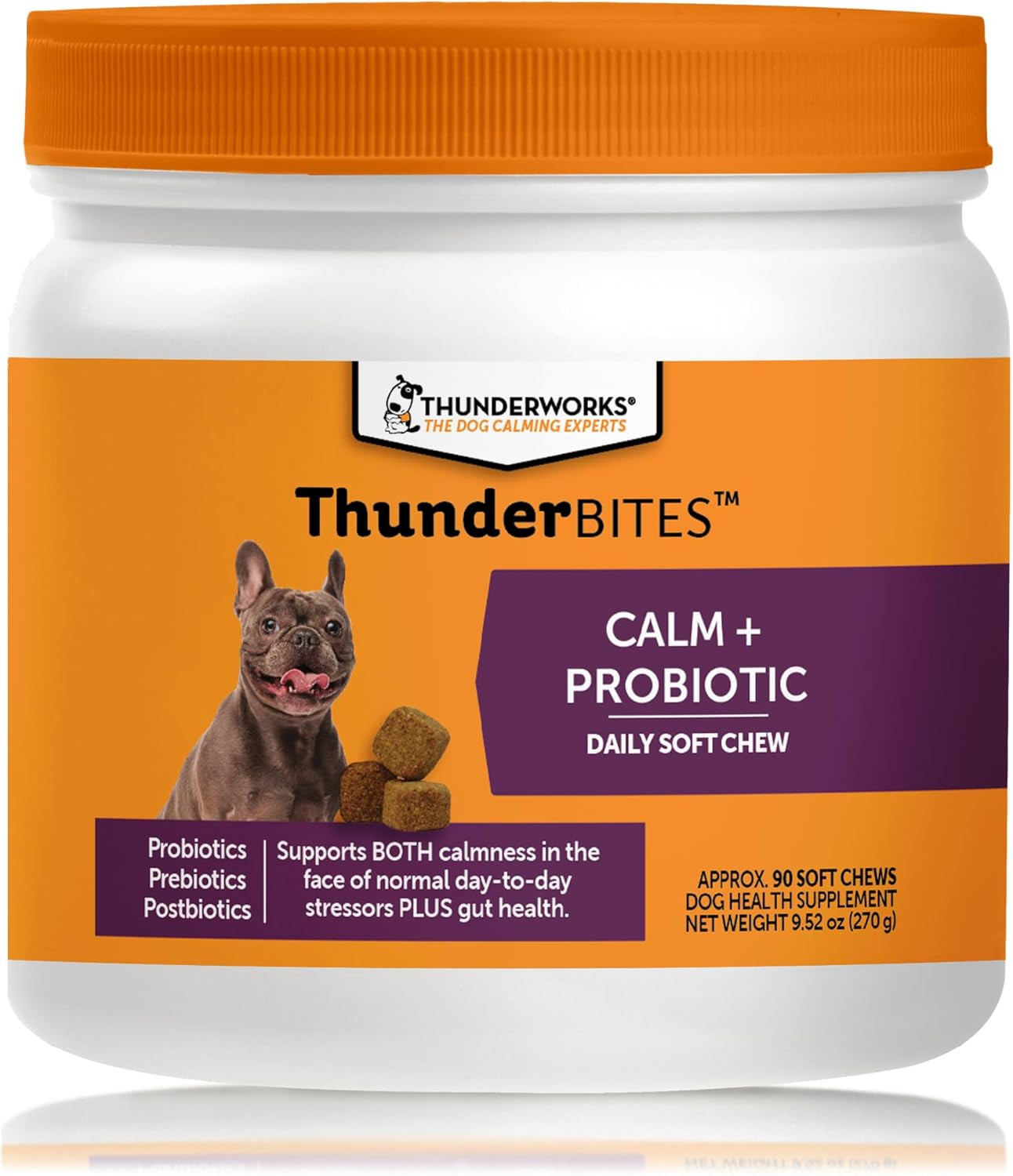
A common misread is that the probiotics do the calming. They do not. The probiotics, prebiotics, and postbiotics (roughly 6 billion CFU) support digestion and gut health. The calming instead comes from a separate set of actives: ashwagandha, L-theanine, L-tryptophan, melatonin, thiamine (vitamin B1), plus ginger and chamomile. Gut health and mood can be linked over the long run, but the probiotics are not a sedative and will not stop mid-panic pacing during fireworks.
Two other points matter for expectations. First, this is a daily supplement, not a fast-acting drug. Ingredients such as L-theanine and L-tryptophan are generally meant to build up with consistent daily use rather than switch anxiety off on the first dose. Second, melatonin supports rest and can help around a known event, but it is not an instant off-switch either. If you gave one chew mid-storm and expected calm within minutes, the timing, not the product, is the likely issue.
Troubleshooting checklist: the four usual causes
When an owner reports no effect, it usually falls into one of four buckets. Work through them in order before concluding the product does nothing for your dog.
| Likely cause | What it looks like | Fix to try |
|---|---|---|
| Wrong timing | Given during or right before the trigger; expecting instant calm. | For an event, give it 30–90 minutes ahead. For daily anxiety, dose at the same time each day and be patient. |
| Dose too low for weight | A big dog getting one or two chews; guessing instead of checking the chart. | Match the label's weight chart exactly (see the table below). Under-dosing is one of the most common reasons for a flat result. |
| Trial too short | Judged after a day or two of daily use. | Give a consistent daily trial of at least 2–3 weeks before deciding for background anxiety. |
| Anxiety too severe | Panic, self-injury, escape attempts, or pain-driven behavior. | A supplement alone will not fix this. Loop in your vet or a veterinary behaviorist (see below). |
Related: -ThunderBites probiotic vs regular calming chews which better
Dose-for-weight and timing at a glance
ThunderBites is intended for dogs 12 weeks and older. Dose by current body weight, and reweigh a growing puppy so the amount keeps pace. If your dog sits between ranges or exceeds the chart, confirm with your vet rather than free-handing a larger amount.
| Dog's weight | Daily chews |
|---|---|
| Up to 25 lb | 1 chew |
| 26–50 lb | 2 chews |
| 51–75 lb | 3 chews |
| 76–100 lb | 4 chews |
Timing, in short: for a predictable stressor (storm, car ride, guests, a vet trip), give the daily dose about 30 to 90 minutes before it starts. For general day-to-day anxiety, dose consistently at the same time each day and let it build. Mixing the two mental models, expecting a daily supplement to act like a one-time sedative, is where most disappointment comes from.
Related: -ThunderBites chews for small breed dogs with anxiety
What a realistic result looks like
Set the bar where the evidence sits. Calming supplements tend to take the edge off mild to moderate, situational stress, they are not tranquilizers. A reasonable "it's working" signal is a dog that settles a bit faster, paces less, or recovers more quickly after a trigger, not a dog that is unbothered by everything. If your dog also has digestive ups and downs, you may notice gut and stool changes from the probiotic side before you notice any mood change; that is expected, since those are two different jobs in the same chew.
When to stop tweaking and call a vet
Talk to your veterinarian if a full-dose, correctly-timed trial of 2 to 3 weeks brings no meaningful change, if the anxiety is severe (panic attacks, self-injury, destructive escape attempts), if signs appeared or worsened suddenly, or if pain or another medical problem could be driving the behavior. Sudden or intense anxiety deserves a medical work-up, not more supplement tweaks. For severe or long-standing cases, a veterinary behaviorist can build a plan, sometimes combining training, environment changes, and prescription support, that a daily chew is not designed to replace. This article is general information and is not a substitute for advice from the vet who knows your dog.