What a small dog actually needs
The most common mistake with small breeds is assuming more chews work faster. They don't. ThunderBites is dosed by body weight, and for a dog 25 lbs and under the label dose is a single chew a day. Doubling up doesn't calm a dog quicker; it just delivers more melatonin and other actives than the dog is meant to have, which can leave a tiny dog groggy or unsettle its stomach.
The second mistake is expecting a switch to flip. These chews are a daily supplement, not a fast-acting sedative. The label lists ingredients associated with calm behavior over regular use, so the fair way to judge them is consistency over a couple of weeks alongside training and environment changes, not a single stressful evening. The chews are for dogs 12 weeks and older; check your dog's age before starting.
Dosing and splitting for tiny dogs
Here is the manufacturer's weight-based dosing so you can see where your dog lands. Nearly every small breed sits in the top row.
| Dog weight | Chews per day | Typical small breeds | How long a 90-count jar lasts |
|---|---|---|---|
| Up to 25 lbs | 1 chew | Chihuahua, Yorkie, Maltese, Pomeranian, Toy Poodle | About 3 months |
| 26–50 lbs | 2 chews | Beagle, Cocker Spaniel, small Terriers | About 45 days |
| 51–75 lbs | 3 chews | Border Collie, Bulldog | About 30 days |
| 76–100 lbs | 4 chews | Labrador, Golden Retriever | About 22 days |
Because the chews are soft, they cut in half with a knife or crumble easily into food. For a dog at the very bottom of the weight range, or a fussy eater, mixing a chew into a meal or introducing it in halves over a few days can make it go down more easily. Splitting is about palatability and easing the dog in, not a way to under-dose a calm dog on purpose. If your dog is only a few pounds and you're unsure the single-chew dose is right, ask your vet before adjusting.
Related: Are ThunderBites dog calming chews too hard for small breeds
Which version to buy
ThunderBites comes in a few formulas that share the same calming base. For a small dog, the choice comes down to whether gut health is also a concern.
- Regular Calming: the calming actives on their own — a good fit if anxiety is the only thing you're addressing.
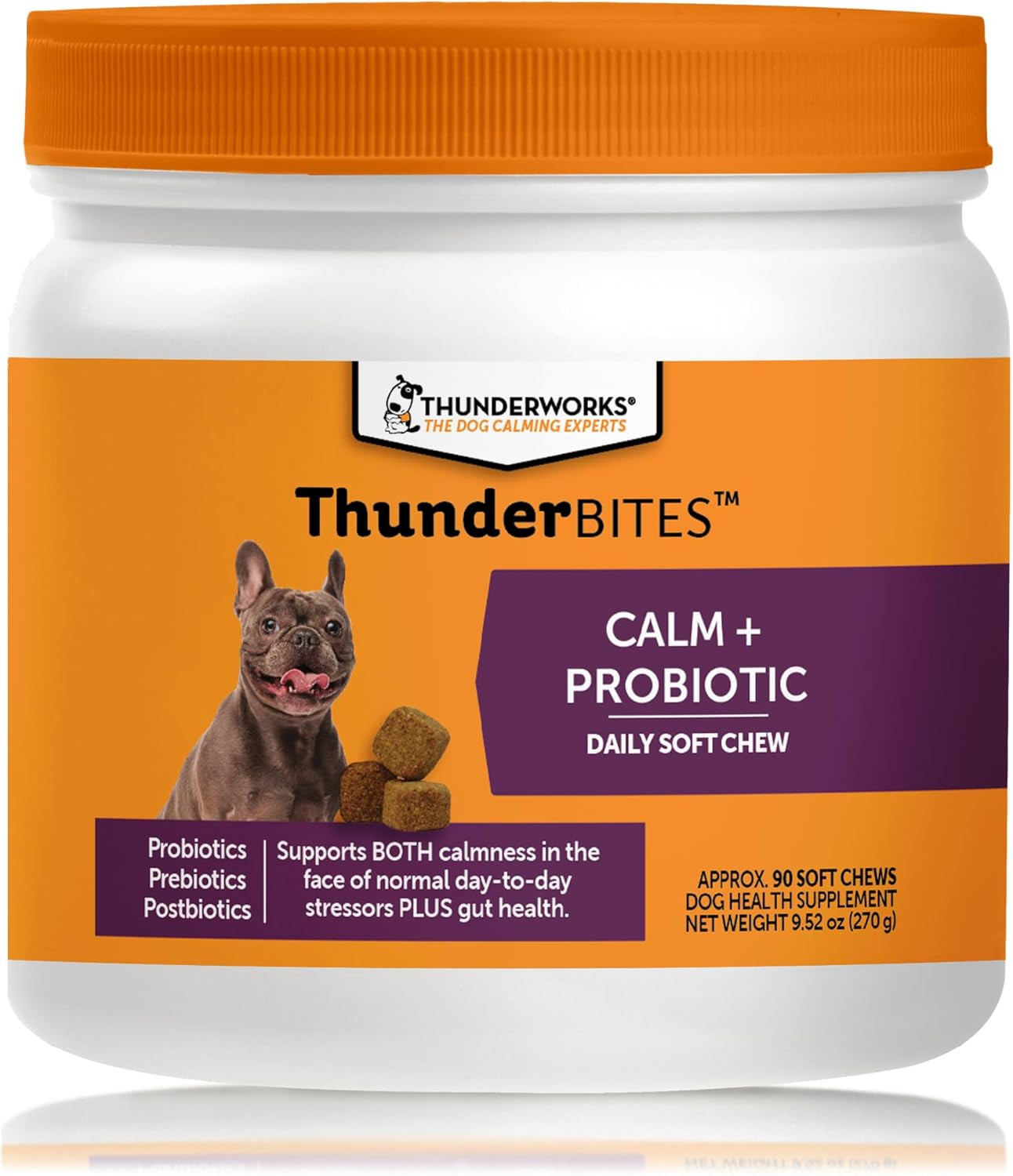
- Calm + Probiotics: adds probiotics, prebiotics, and postbiotics for digestive support. Worth it if your small dog has soft stools, a sensitive stomach, or you want a daily gut-support routine bundled in.
Neither version is stronger on the calming side for a given weight — the difference is only the added gut support. The calming ingredient panel is the same set: ashwagandha, L-theanine, L-tryptophan, melatonin, thiamine (vitamin B1), plus ginger and chamomile. The probiotic version featured here carries roughly 6 billion CFU of probiotics.
Related: ThunderBites probiotic vs regular calming chews which better
What to check before you buy
- NASC seal: ThunderBites is NASC certified. The National Animal Supplement Council seal signals the maker meets quality and labeling standards — a reasonable baseline to look for on any dog supplement.
- Version match: confirm you're ordering the formula you want (plain Calming vs Calm + Probiotics), since the jars look similar.
- Flavor and palatability: these are chicken-flavored soft chews, which most dogs take as a treat. If your small dog is an especially picky eater, plan to crumble the first few into food.
- Count and value: a 90-count jar is the common size; for a one-chew-a-day small dog that's about a three-month supply.
- Vet check first: if your dog is pregnant, on medication, or has a health condition, clear any new supplement with your veterinarian before starting.
If your small dog's anxiety is mild to moderate and tied to everyday triggers — noises, being left alone, car trips — a once-daily calming chew is a sensible thing to try. Start with the single chew, give it consistent time, and adjust with your vet if needed. It pairs well with other tools like a snug wrap or crate training on rough days.