What these botanicals are and how they are supposed to work
- Chamomile (Matricaria recutita). Used in dogs as a mild sedative, anti-inflammatory and muscle relaxant (VCA Animal Hospitals). Some lab studies suggest apigenin, a flavonoid in chamomile, may act on GABA receptors; this has not been shown in dogs.
- Valerian root (Valeriana officinalis). Thought to raise GABA activity in the brain, a bit like a much weaker benzodiazepine (PetMD).
- Passionflower (Passiflora incarnata). Also proposed to act on GABA pathways. Most research is in rodents and people (systematic review, 2020).
- Others you may see: ginger (for travel nausea), lemon balm, skullcap, and Magnolia or Phellodendron bark extracts.
What dog studies actually show
Valerian
- PetMD, citing veterinarians, notes that trials of valerian alone in dogs are essentially absent. Human evidence is inconclusive (PetMD).
- A 2019 Hartpury University conference poster looked at 28 dogs. Owners used a valerian diffuser for 30 days and filled in questionnaires before and after. There was no placebo group. About 43% of owners reported improvement. But the rate of anxiety behaviors did not change in a statistically clear way (Hartpury University).
- A 2025 study in the Journal of Veterinary Behavior tested Hericium erinaceus and valerian extracts and reported some reductions in anxiety-related behavior with EEG changes (J Vet Behav, 2025). It combined ingredients and was small, so it cannot isolate valerian's effect.
Chamomile
We found no controlled trial of oral chamomile for anxiety in dogs. VCA describes its use as a sedative but notes the FDA does not review herbal supplements before sale (VCA).
Passionflower
No stand-alone dog trial was found. A 2020 systematic review of Passiflora incarnata in people found some anxiety-reducing effects but called for better-designed studies (systematic review).
A related botanical that was tested
For comparison, a triterpene supplement from Souroubea and Platanus plants was tested in 60 Beagles. The study played thunderstorm noise and used a double-blind design, with placebo and diazepam groups for comparison (Molecules, 2021). It shows that botanicals can be tested rigorously, which has rarely been done for the three herbs above.
Dose figures
- Valerian: a veterinary herbal text quoted by PetMD lists 1 to 7.5 g dried root or 7 to 15 mL tincture, but these figures are not clinically established (PetMD).
- Chamomile and passionflower: no study-based dog dose was found in Merck, VCA or peer-reviewed dog trials.
- Calming chews typically list herbs in milligrams per chew, often as part of a blend. Amounts are set by the manufacturer, not by trial data.
Onset
No dog study has measured onset for these herbs. Products are usually labeled for use 30 to 60 minutes before an event. Because the evidence is thin, judge response over several uses, and pair any supplement with a behavior plan, as integrative vets advise (PetMD).
Safety, interactions and who should avoid them
- Chamomile. The ASPCA lists the plant as toxic to dogs. Possible signs: skin irritation, vomiting, diarrhea, poor appetite and allergic reactions. Long-term use may raise bleeding risk (ASPCA Animal Poison Control). VCA advises caution with NSAIDs, sedatives and warfarin. It also advises avoiding it in pets allergic to ragweed or daisies, in pregnant or nursing pets, and in young or frail pets (VCA).
- Valerian. Drowsiness and lethargy are the expected effects. Paradoxical excitement, where a dog becomes more restless, is reported in a minority of animals (Whole Dog Journal). PetMD notes it may interact with anesthetics, sedatives, seizure drugs and antifungals. Stop it 2 weeks before surgery. It is not recommended in pregnancy (PetMD).
- Passionflower. Limited dog safety data. Avoid in pregnancy as a precaution.
- Stacking sedatives. Herbs that enhance GABA activity may add to the effects of benzodiazepines, trazodone, gabapentin, SSRIs and tricyclic antidepressants (Whole Dog Journal).
How to read the label
- Look for the Latin name and plant part (for example, Valeriana officinalis root). Vague terms like "herbal blend" hide amounts.
- Check milligrams per chew for each herb, not just for the blend. A "proprietary blend" total does not tell you how much valerian is inside.
- Note whether it is dried herb or a standardized extract. Extracts can be much stronger per milligram.
- Count how many sedating ingredients the chew stacks together, especially if your dog already takes medication.
- Look for the NASC Quality Seal and a lot number.
Which calming chews contain it
The table below lists calming chews whose labels include chamomile and other botanicals, with milligrams per chew where stated.
| Chew | Per chew | Per day, 40 lb dog* | |
|---|---|---|---|
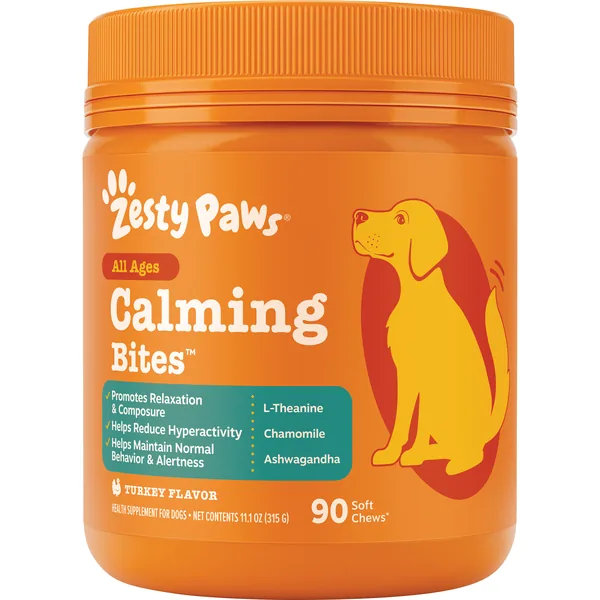 Zesty PawsCalming Bites (Turkey)Read review → | 80 mg | 160 mg | Search on Amazon |
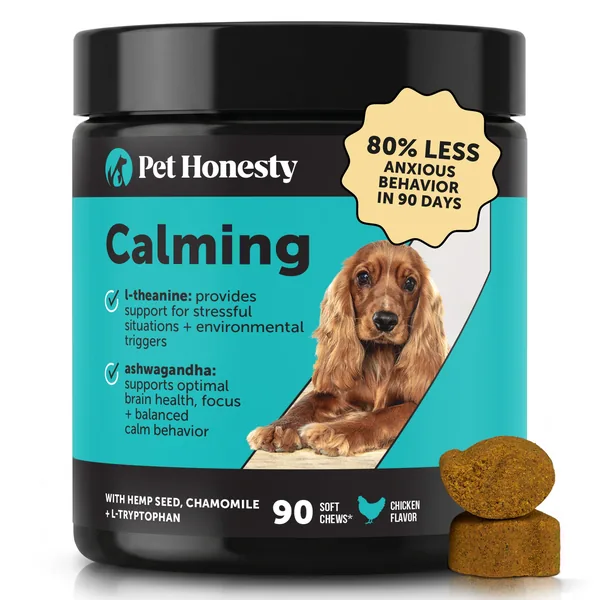 PetHonestyHemp Calming (Chicken)Read review → | 80 mg | 160 mg | Check on Amazon |
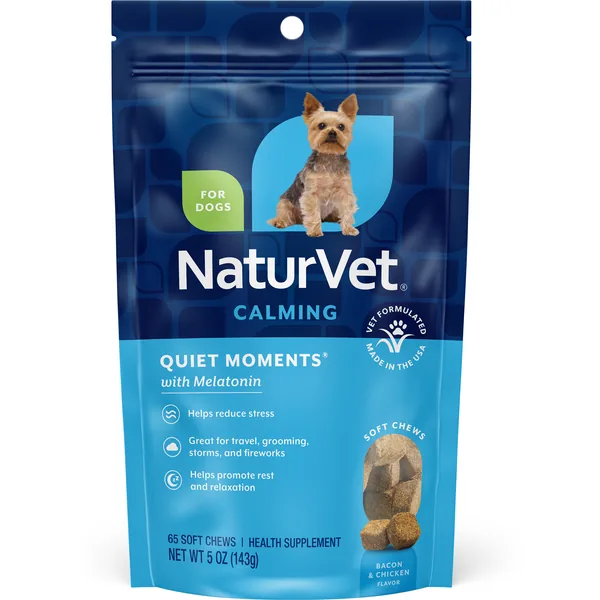 NaturVetQuiet MomentsRead review → | 75 mg | 150 mg | Check on Amazon |
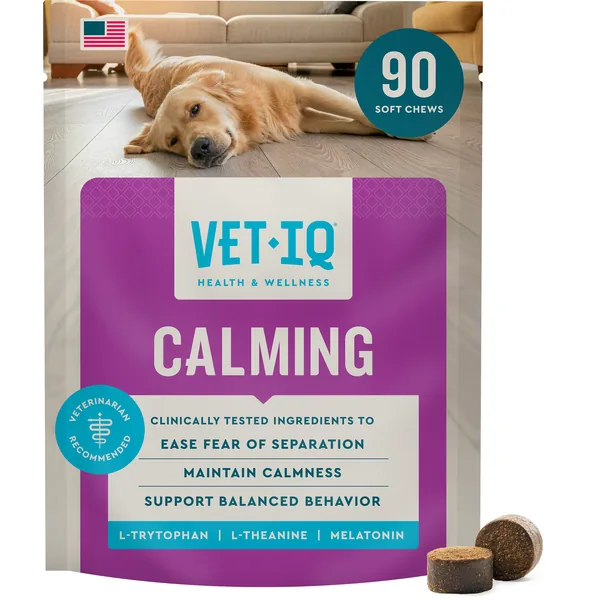 VetIQCalming SupportRead review → | 60 mg | 120 mg | Check on Amazon |
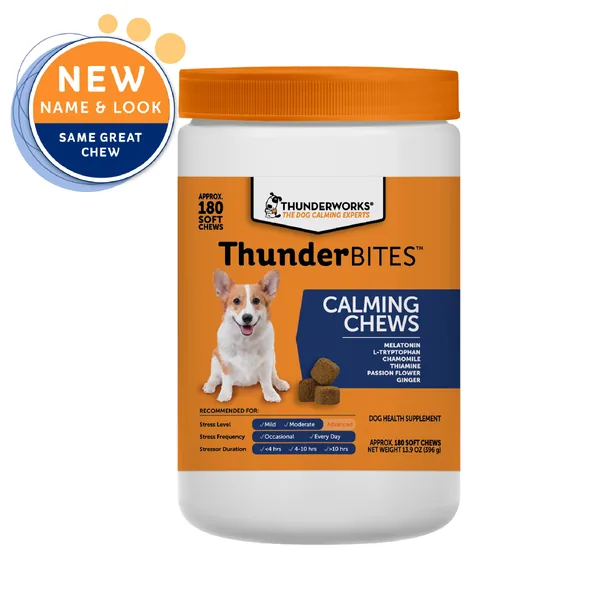 ThunderWorksThunderBites OriginalRead review → | 50 mg | 100 mg | Check on Amazon |
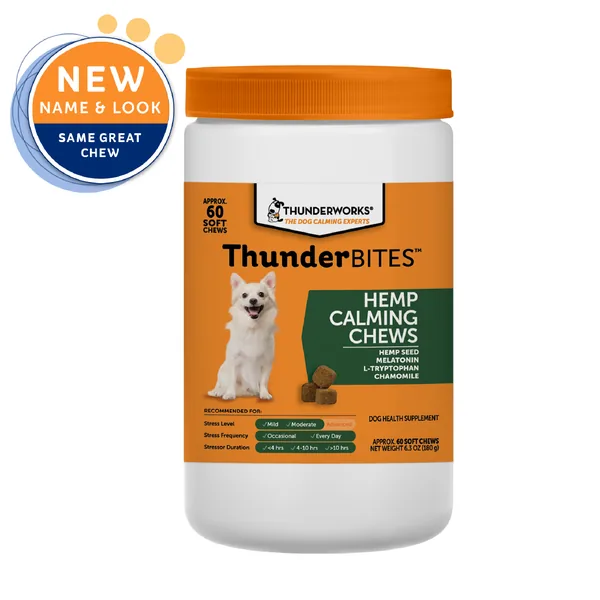 ThunderWorksThunderBites HempRead review → | 50 mg | 100 mg | Check on Amazon |
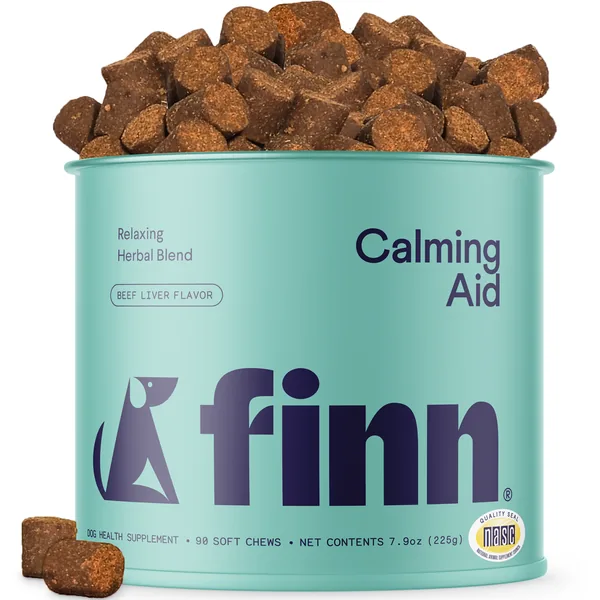 FinnCalming Aid | 20 mg | 40 mg | Check on Amazon |
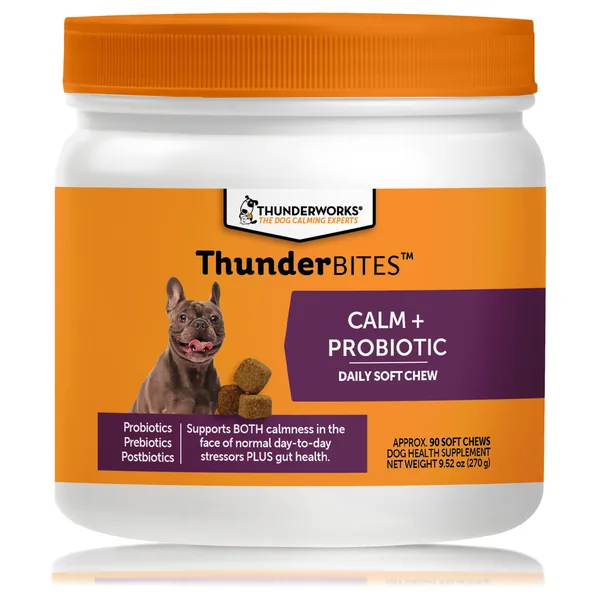 ThunderWorksThunderBites Calm + ProbioticRead review → | 10 mg | 20 mg | Check on Amazon |
*Using each label's own weight chart. "—" means the dosing chart is not published in text form.
Ask your veterinarian before giving herbal calming chews, especially if your dog takes medication, is pregnant, or has a health condition.
Frequently asked questions
Is chamomile safe for dogs?
Small amounts in a chew are generally tolerated. Still, the ASPCA lists the chamomile plant as toxic to dogs. Possible signs are vomiting, diarrhea and skin irritation, and long-term use may raise bleeding risk. Avoid it in dogs allergic to ragweed or daisies, pregnant dogs, and dogs on blood thinners or NSAIDs.
Can valerian root make my dog more anxious?
It can. Valerian is reported to cause paradoxical excitement in a minority of animals, meaning restlessness instead of calm. If your dog seems more agitated after a valerian product, stop it and tell your vet. Try a new product on a quiet day first so you can see how your dog responds.
How much valerian can I give my dog?
No clinically established dose exists for dogs. A veterinary herbal text quoted by PetMD lists ranges of 1 to 7.5 grams of dried root, but these are not trial-based. Calming chews usually contain far less. Follow the label and ask your vet, particularly if your dog takes sedatives or seizure drugs.
Does passionflower work for dogs?
There are no controlled trials of passionflower alone in dogs. Its reputation rests on rodent research and human studies, which a 2020 systematic review found promising but limited. In dogs it appears only in blends, so any effect cannot be credited to passionflower specifically.
Can herbal calming chews be given with trazodone or gabapentin?
Use caution. Valerian, passionflower and chamomile are thought to act on GABA pathways, so combining them with trazodone, gabapentin, benzodiazepines or anesthetics may add to sedation. Ask your vet before mixing, and stop valerian about 2 weeks before planned surgery.
Sources
- VCA Animal Hospitals. Chamomile.
- ASPCA Animal Poison Control. Toxic and non-toxic plants: Chamomile.
- PetMD. Valerian root for dogs: does it work?
- Hartpury University. The anxiolytic effects of valerian (Valeriana officinalis) on the domestic dog.
- Multimodal assessment of Hericium erinaceus and Valeriana officinalis for canine anxiety. J Vet Behav. 2025.
- Janda K et al. Passiflora incarnata in neuropsychiatric disorders: a systematic review. Nutrients. 2020.
- Efficacy of Souroubea-Platanus dietary supplement in Beagle dogs using a thunderstorm noise-induced model. Molecules. 2021.
- Whole Dog Journal. Are canine calming formulas all safe?