What it is and how it is supposed to work
Many calming chews put the word "hemp" on the front of the bag. That single word can mean two very different things.
- Hemp seed or hemp seed oil. Pressed from the seeds of Cannabis sativa. It supplies linoleic acid (omega-6) and alpha-linolenic acid (omega-3). The seeds themselves contain only trace cannabinoids, so this ingredient has no proposed calming mechanism beyond general nutrition.
- CBD (cannabidiol), "hemp extract," or "full/broad spectrum hemp." Extracted from the flowers and leaves. CBD is proposed to act on the endocannabinoid system and serotonin 5-HT1A receptors, which is why it is studied for stress and pain. A 2023 review of CBD in dogs summarizes this mechanism and the limited behavior data (Frontiers in Veterinary Science, 2023).
Legally, hemp is Cannabis sativa with no more than 0.3% delta-9 THC by dry weight, under the 2018 Farm Bill. The FDA states it has not approved cannabis or CBD for any use in animals and cannot ensure the safety or effectiveness of these products (FDA). The FDA Center for Veterinary Medicine has sent warning letters to pet CBD sellers making treatment claims (AVMA News).
What dog studies actually show
Noise fear: Morris et al., 2020
16 dogs were tested in a replicated 4 x 4 Latin square with 4 treatments: control, 25 mg CBD per day, trazodone, and CBD plus trazodone. Each treatment period lasted 7 days, and treats were given 4 to 6 hours before a fireworks noise test. CBD targeted at 2 mg/kg (actual intake about 1.4 mg/kg per day) did not reduce fear behavior, while trazodone did (Morris et al., Frontiers in Veterinary Science, 2020). The dose was low compared with later studies, and the sample was small.
Shelter aggression: Corsetti et al., 2021
24 shelter dogs were split into 12 given a CBD-rich hemp oil (about 1.25 mg/kg/day) and 12 given placebo for 45 days. Aggression toward humans dropped in the treated group, but the drop was not statistically significant compared with placebo (Corsetti et al., Scientific Reports, 2021). The authors later published a correction that amended the stated composition of the oil (author correction). This was a measure of aggression, not noise or separation fear.
Car travel and separation: Waltham studies
A single 4 mg/kg dose given before car travel and separation reduced some stress measures compared with placebo (Hunt et al., 2023). A 6-month study of 19 dogs with daily dosing reported reductions in some, but not all, stress indicators during repeated car journeys (Flint et al., Journal of Animal Science, 2024). Both were run by the Waltham Petcare Science Institute, part of Mars Petcare, which has a commercial interest in pet products.
Hemp seed oil
We found no controlled study showing that hemp seed oil alone calms dogs.
Dose figures from studies
- About 1.25 mg/kg/day for 45 days: drop in aggression not significant vs placebo (Corsetti 2021).
- 25 mg/day (about 1.4 mg/kg): no effect on noise fear (Morris 2020).
- 2 mg/kg twice daily: used in an osteoarthritis pain trial in 16 dogs (Gamble et al., 2018).
- 4 mg/kg: single and daily doses in the Waltham stress studies (Hunt 2023; Flint 2024).
- 5 or 10 mg/kg/day for 36 weeks: given to 18 healthy dogs; ALP rose in the CBD groups (P<.0001), so vet monitoring is advised (Corsato Alvarenga et al., JVIM 2024).
Most chews list CBD in milligrams per chew. Divide by your dog's weight in kilograms to compare against these figures.
Onset
Oral CBD reached peak blood levels about 1.5 to 2 hours after dosing in pharmacokinetic work, and the single-dose stress study dosed about 2 hours before the event (Gamble 2018; Hunt 2023). Plan ahead if a storm or trip is expected.
Safety, interactions and who should avoid it
- Liver enzymes. Rises in alkaline phosphatase (ALP) were seen at 2 mg/kg twice daily (Gamble 2018) and in long-term studies (JVIM 2024). Dogs on long-term CBD may need periodic bloodwork.
- Drug interactions. Data are limited; one study found no significant interaction with phenobarbital in healthy dogs, but tell your vet about any CBD use with medications (2023 review).
- THC contamination. Merck Veterinary Manual notes signs of CBD toxicosis such as lethargy, vomiting and ataxia, and that THC in mislabeled products can cause more serious signs (Merck Veterinary Manual).
- Avoid or ask first: pregnant or nursing dogs, puppies, dogs with liver disease, and dogs on seizure, heart or behavior medication.
Hemp seed oil is a food fat. Large amounts can cause loose stools, and it adds calories. ThunderBites Hemp Calming Chews, for example, list hemp seed oil 75 mg and hemp seed powder 75 mg per chew (hemp seed, not CBD).
How to read the label
- Look for the exact ingredient: "hemp seed oil" or "hemp seed powder" means little to no CBD. "Hemp extract," "CBD," or "full spectrum" signals cannabinoids.
- Find the CBD milligrams per chew. "Hemp" milligrams are not CBD milligrams.
- Ask for a batch-specific Certificate of Analysis (COA) from a third-party lab that lists CBD and THC.
- Check the NASC Quality Seal, which indicates the company passed an audit of its manufacturing practices.
- Be wary of claims to treat anxiety or disease. The FDA treats those as unapproved drug claims.
Which calming chews contain it
The table below lists calming chews whose labels include hemp seed or CBD, with amounts where the label states them.
| Chew | Hemp on the label | |
|---|---|---|
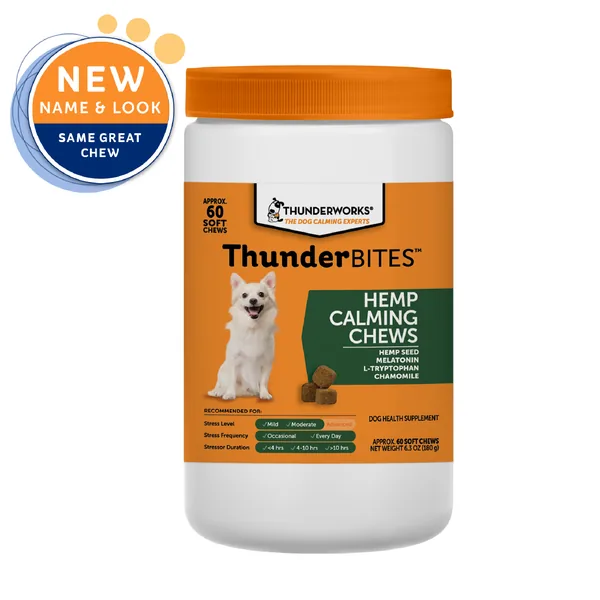 ThunderWorksThunderBites HempRead review → | hemp seed oil 75 mg + hemp seed powder 75 mg per chew (hemp seed, not CBD) | Check on Amazon |
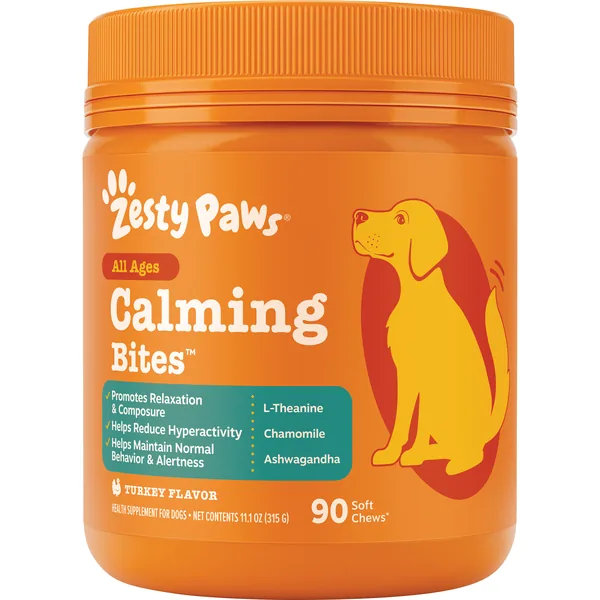 Zesty PawsCalming Bites (Turkey)Read review → | hemp seed powder 50 mg per chew (hemp seed, not CBD) | Search on Amazon |
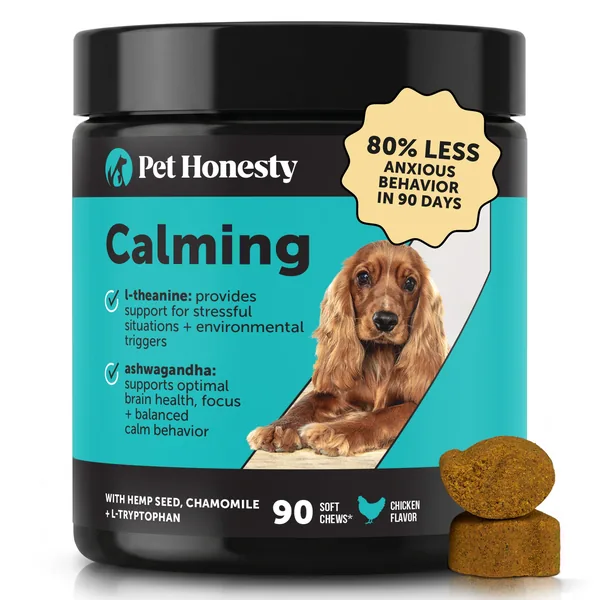 PetHonestyHemp Calming (Chicken)Read review → | hemp seed powder 50 mg + hemp seed oil 37.5 mg per chew (hemp seed, not CBD) | Check on Amazon |
 Native PetCalm Chews | hemp seed powder 200 mg per chew (hemp seed, not CBD) | Check on Amazon |
Talk to your veterinarian before starting any hemp or CBD product, especially if your dog takes medication, is pregnant, or has a health condition.
Frequently asked questions
Does hemp seed oil have CBD in it?
Essentially no. Hemp seed oil is pressed from the seeds, which contain only trace cannabinoids, mostly from contact with the plant's flowers and leaves. It is a source of omega-6 and omega-3 fatty acids. CBD comes from flower and leaf extracts, so a label listing only hemp seed oil should not be read as a CBD product.
Is CBD safe for dogs?
Short- and medium-term studies in healthy dogs have used about 1 to 10 mg/kg per day with few side effects, but a rise in the liver enzyme ALP is common (a 36-week study at 5 or 10 mg/kg/day found clear ALP increases), so vet monitoring is advised. The FDA has not approved CBD for animals and cannot confirm product quality, so ask your vet first, especially if your dog takes medication.
Does CBD help dogs with fireworks or thunder anxiety?
The evidence is mixed. A 2020 study of 16 dogs given 25 mg of CBD daily found no reduction in fear during a fireworks recording, while trazodone did help. Industry-funded studies on car travel and separation reported lower stress scores at 4 mg/kg. No study yet settles the question for noise fear.
How long does CBD take to work in dogs?
Blood levels of oral CBD peak about 1.5 to 2 hours after a dose in pharmacokinetic studies. The Waltham single-dose study gave CBD about 2 hours before a stressful event. Hemp seed oil has no fast calming action, since it supplies fats rather than an active cannabinoid.
Can my dog fail a drug test or get high from hemp chews?
Hemp products must contain no more than 0.3% delta-9 THC by dry weight under the 2018 Farm Bill, but testing of pet CBD products has found mislabeled THC content. THC toxicosis causes wobbliness, dribbling urine and lethargy. Call your vet or ASPCA Poison Control if you see these signs.
Sources
- Morris EM et al. The impact of feeding cannabidiol (CBD) containing treats on canine response to a noise-induced fear response test. Front Vet Sci. 2020.
- Corsetti S et al. Cannabis sativa L. may reduce aggressive behaviour towards humans in shelter dogs. Sci Rep. 2021. Author correction.
- Gamble LJ et al. Pharmacokinetics, safety, and clinical efficacy of cannabidiol treatment in osteoarthritic dogs. Front Vet Sci. 2018.
- Hunt ABG et al. A single dose of cannabidiol (CBD) positively influences measures of stress in dogs during separation and car travel. Front Vet Sci. 2023.
- Flint HE, Hunt ABG, Logan DW, King T. Daily dosing of CBD demonstrates a positive effect on measures of stress in dogs during repeated exposure to car travel. J Anim Sci. 2024.
- Corsato Alvarenga I, Wilson KM, McGrath S. Tolerability of long-term cannabidiol supplementation to healthy adult dogs. J Vet Intern Med. 2024.
- Pharmacokinetics, efficacy, and safety of cannabidiol in dogs: an update of current knowledge. Front Vet Sci. 2023.
- Merck Veterinary Manual. Toxicosis in dogs and cats from cannabidiol (CBD).
- FDA. Regulation of cannabis and cannabis-derived products, including CBD.
- AVMA News. FDA issues warnings over CBD for animals.