What melatonin is and how it may work
Melatonin is a hormone made by the pineal gland from serotonin, which itself comes from the amino acid tryptophan. Its levels rise in darkness and help set the sleep-wake cycle. Supplemental melatonin binds MT1 and MT2 receptors in the brain, which is thought to promote drowsiness and shift circadian rhythm.
In dogs it is used off-label, meaning no melatonin product is FDA-approved for dogs. Vets use it for sleep disturbances (including night waking in older dogs with cognitive dysfunction), as an add-on for noise and storm stress, and for non-allergic hair loss such as seasonal flank alopecia and alopecia X.
What the dog studies actually show
This is where honesty matters: there are no published placebo-controlled trials of melatonin for anxiety in dogs. Its use for noise fear rests on clinical experience, case reports, and human sleep research.
- Hair loss. This is the best-studied canine use. The Merck Veterinary Manual describes melatonin for canine alopecia, and a 2025 controlled study in intact male Pomeranians with alopecia X (PMC12070944) compared oral doses to look at effects on reproductive parameters. Hair-loss studies use much higher doses than calming chews do.
- Immune and blood work. A pharmacodynamic study of healthy dogs looked at oral melatonin and T-cell cytokines; it is relevant to vets using melatonin for immune-mediated thrombocytopenia, not to calming.
- Noise fear. A 2023 evidence review of noise-fear treatments (a review in Animals) found little controlled research on melatonin in dogs.
Bottom line: melatonin is widely used and generally well tolerated, but evidence that it reduces anxiety in dogs is anecdotal. It may help a dog sleep through a stressful night more than it reduces fear itself.
Dose ranges by dog weight
References disagree, partly because some use a flat dose per dog and others use mg per kilogram.
| Reference | Dose | Notes |
|---|---|---|
| Merck Veterinary Manual | 3–6 mg per dog by mouth every 6–8 hours | Listed for hair-loss (alopecia) disorders, not as a calming dose; flat dose not scaled to weight |
| Veterinary literature summarized in the Pomeranian alopecia X study | 0.1 to 1.7 mg/kg depending on condition | Lower end for sleep and calming, higher end for hair loss |
| Weight-based calming dose (0.1 mg/kg) | 10 lb dog: about 0.5 mg; 30 lb: about 1.4 mg; 60 lb: about 2.7 mg; 100 lb: about 4.5 mg | Calculated by us from 0.1 mg/kg; ask your vet to confirm |
Notice the gap: a flat 3 mg is roughly 0.66 mg/kg for a 10 lb dog but only 0.07 mg/kg for a 100 lb dog. That is one reason your vet should set the dose, especially for small breeds. The calming chews in our comparison table range from 0.01 mg (10 mcg, the original ThunderBites chew) to 5 mg (Native Pet Calm Chews) per chew; ThunderBites Calm + Probiotic has 1.5 mg per chew, a meaningful dose for a small dog or puppy, so ask your vet first, especially for small dogs, puppies, pregnant dogs, and dogs on medication. Check whether a label lists mg or mcg, since the two differ a thousandfold.
Onset and duration
VCA Animal Hospitals says melatonin should take effect in 1 to 2 hours and that its effects usually wear off within 24 hours, though this may be longer in pets with liver or kidney disease. For a predictable event, many vets suggest giving it ahead of time rather than once the dog is already panicking. Hair-loss treatment takes weeks to months to judge.
Safety, side effects, and interactions
- Xylitol. Some human melatonin gummies, quick-dissolve tablets, and liquids contain xylitol, which can cause a dangerous drop in blood sugar and liver damage in dogs (FDA; ASPCA). Only use a product your vet approves, and read the inactive ingredients.
- Common side effects per VCA include drowsiness, weight gain, and changes in fertility. Stomach upset and confusion are also reported.
- Overdose. The Merck Veterinary Manual toxicology chapter groups melatonin with sleep aids; large ingestions typically cause sleepiness, incoordination, or vomiting. Call your vet or ASPCA Animal Poison Control (888-426-4435, a fee may apply) if your dog eats a bottle.
- Interactions. VCA lists caution with benzodiazepines, warfarin, and ciprofloxacin among others. Tell your vet about every drug and supplement, including sedatives and anti-anxiety medications.
- Who should avoid it or use extra caution: pregnant dogs, dogs not yet sexually mature (melatonin affects reproductive hormones), intact breeding dogs, diabetic dogs, and dogs with liver or kidney disease.
Ask your vet first. Talk to your veterinarian before starting any calming supplement, especially if your dog takes medication, is pregnant or nursing, is a puppy, or has liver, kidney, or other health conditions. This page is label research written by researchers, not veterinarians, and it is not a substitute for an exam.
How to read a chew label for melatonin
- mg vs mcg is the big trap. 1 mg equals 1,000 mcg. A label listing 500 mcg means 0.5 mg. A chew listing 3,000 mcg is 3 mg. Convert before comparing products.
- Find the amount per chew. If the label lists per serving, divide by the number of chews in a serving.
- Add up the daily total from the feeding directions for your dog's weight and compare it with what your vet recommends.
- Check inactive ingredients for xylitol (sometimes listed as birch sugar) on any product not made for pets.
- Note other sedating ingredients such as hemp, valerian, or chamomile that could add to drowsiness.
Which calming chews contain it
The table below lists calming chews whose labels declare melatonin, sorted by milligrams per chew.
| Chew | Per chew | Per day, 40 lb dog* | |
|---|---|---|---|
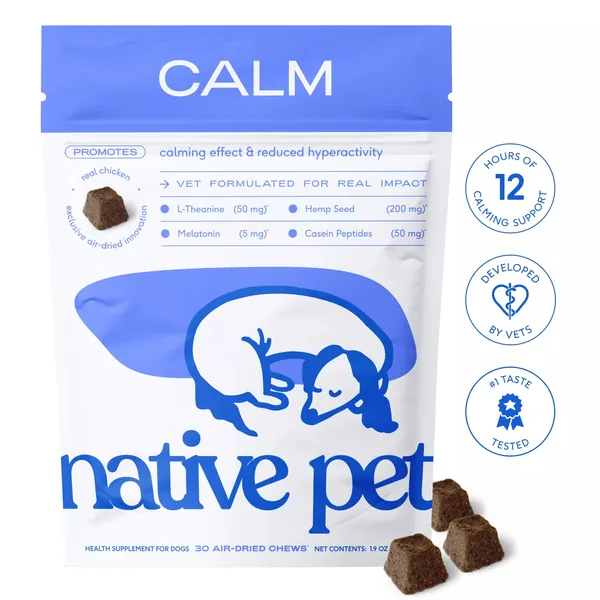 Native PetCalm Chews | 5 mg | 10 mg | Check on Amazon |
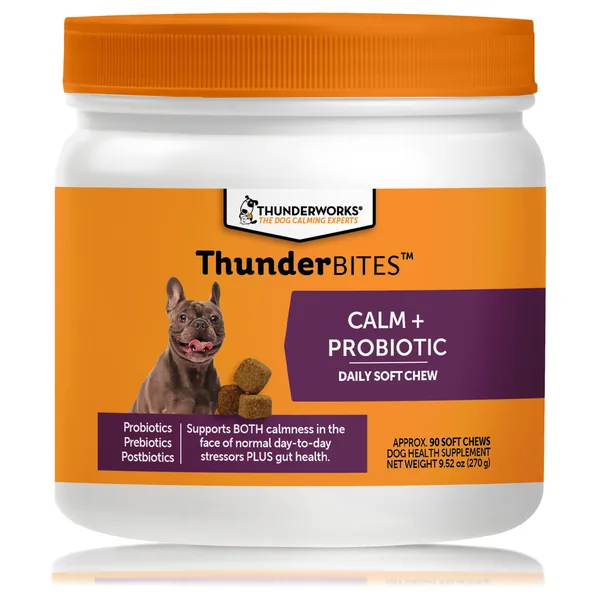 ThunderWorksThunderBites Calm + ProbioticRead review → | 1.5 mg | 3 mg | Check on Amazon |
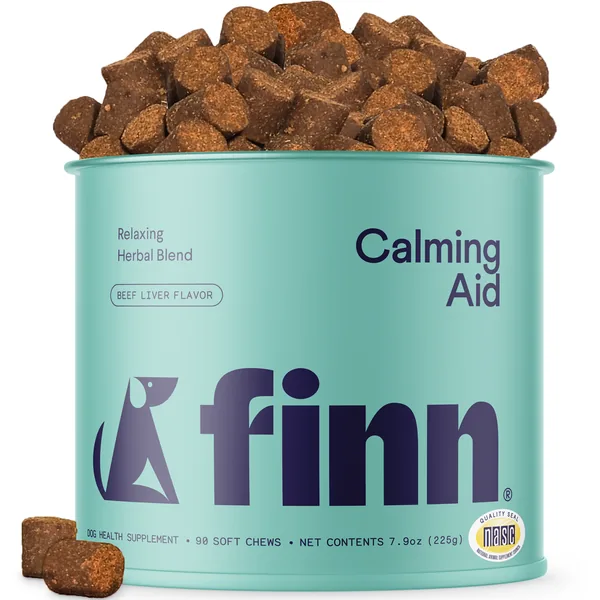 FinnCalming Aid | 1 mg | 2 mg | Check on Amazon |
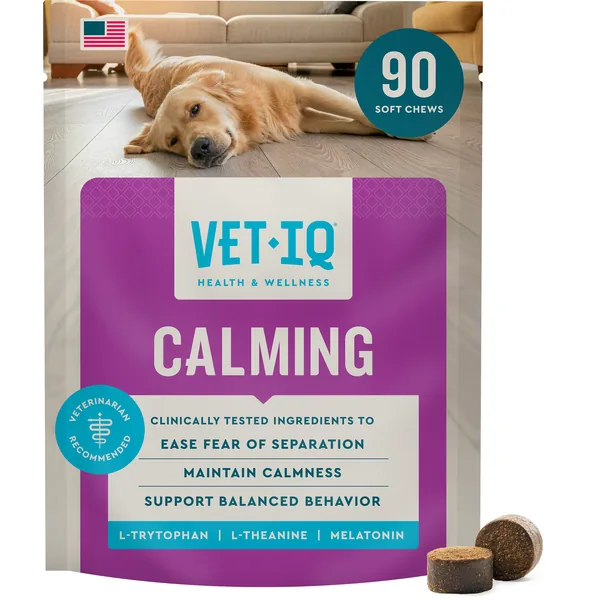 VetIQCalming SupportRead review → | 250 mcg | 500 mcg | Check on Amazon |
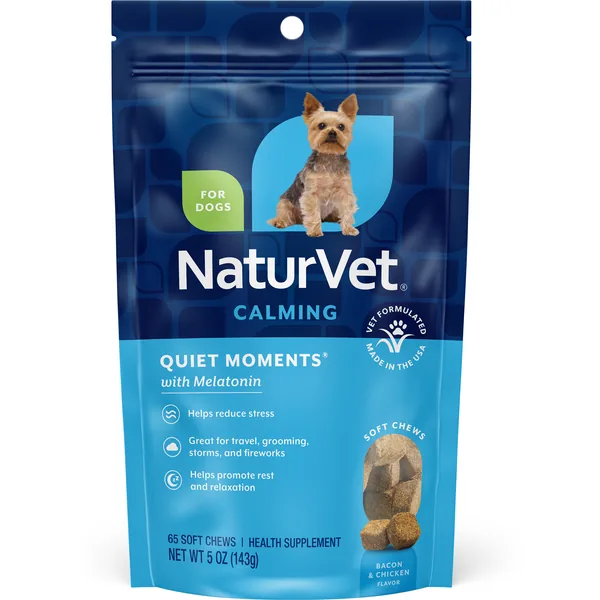 NaturVetQuiet MomentsRead review → | 60 mcg | 120 mcg | Check on Amazon |
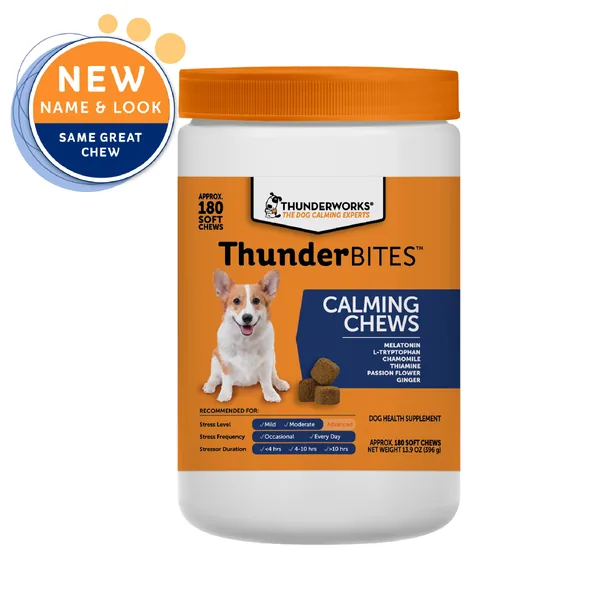 ThunderWorksThunderBites OriginalRead review → | 10 mcg | 20 mcg | Check on Amazon |
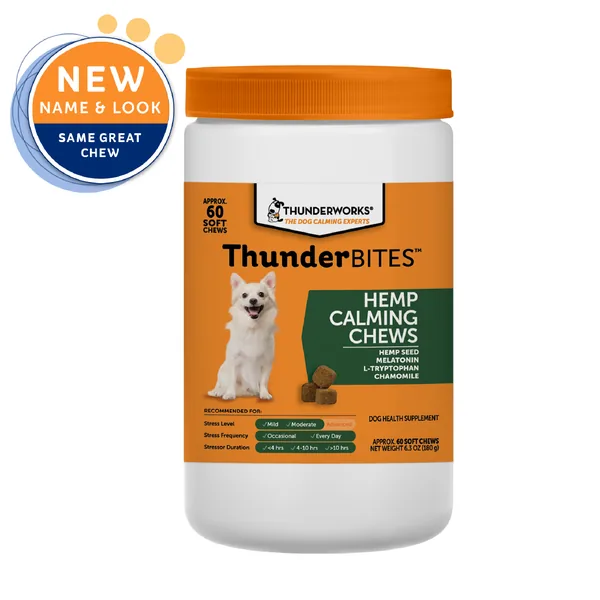 ThunderWorksThunderBites HempRead review → | 10 mcg | 20 mcg | Check on Amazon |
*Using each label's own weight chart. "—" means the dosing chart is not published in text form.
Sources
- Merck Veterinary Manual. Hormonal treatment for integumentary disease in animals.
- Merck Veterinary Manual. Toxicoses in animals from human antidepressants, anxiolytics, and sleep aids.
- VCA Animal Hospitals. Melatonin.
- Dose-response effects of oral melatonin on reproductive parameters in intact male Pomeranian dogs with alopecia X: a controlled study. 2025.
- Therapy and prevention of noise fears in dogs: a review. Animals. 2023.
- U.S. Food and Drug Administration. Paws off xylitol; it's dangerous for dogs.
- ASPCA Animal Poison Control. People foods to avoid feeding your pets.
Frequently asked questions
How much melatonin can I give my dog?
The Merck Veterinary Manual lists 3–6 mg per dog by mouth every 6–8 hours, listed for hair-loss (alopecia) disorders, not as a calming dose. Weight-based calming doses are often about 0.1 mg/kg, which is roughly 0.5 mg for a 10 lb dog. Because the references differ, ask your vet to set the dose for your dog.
Can I give my dog human melatonin?
Vets sometimes approve human melatonin, but only plain products without xylitol, which is toxic to dogs. Gummies, quick-dissolve tablets, and flavored liquids are the most likely to contain it. Human tablets also come in strengths up to 10 mg, which can be too much for a small dog.
How long does melatonin take to work in dogs?
VCA Animal Hospitals says melatonin usually takes effect in 1 to 2 hours and its effects generally wear off within 24 hours. Effects may last longer in dogs with liver or kidney disease. For fireworks or storms, give it ahead of time as your vet directs.
What happens if a dog eats too much melatonin?
Large amounts usually cause sleepiness, vomiting, incoordination, or a faster heart rate. The bigger danger is often xylitol or other drugs in a human product. Call your vet or ASPCA Animal Poison Control at 888-426-4435 right away with the package in hand.
Is it safe to give my dog melatonin every night?
Vets do use melatonin daily for sleep problems and hair loss, and it is generally well tolerated. Long-term use can affect reproductive hormones, so it needs extra caution in intact or young dogs. Ask your vet before daily use and recheck if your dog seems overly sleepy.