What L-tryptophan is and how it may work
Tryptophan is one of the essential amino acids dogs must get from food. Every complete dog food already contains it. In the brain, tryptophan is converted to 5-HTP, then to serotonin, and later to melatonin.
The calming idea is simple: more tryptophan reaching the brain could mean more serotonin. The catch is that tryptophan competes with other large neutral amino acids (LNAAs), such as leucine and tyrosine, to cross the blood-brain barrier. So what matters is the ratio of tryptophan to LNAAs in the whole diet, not just the milligrams in one chew. A high-protein meal brings lots of competing amino acids, which can blunt the effect.
What the dog studies actually show
- DeNapoli et al., 2000 (JAVMA). 33 dogs (11 with dominance aggression, 11 with territorial aggression, 11 with hyperactivity) were rotated through high- and low-protein diets with and without added tryptophan. Territorial aggression scores were lower on a low-protein diet with tryptophan, and dominance aggression scores were highest on the unsupplemented high-protein diet. Limits: small groups, owner-scored behavior, and diet changes rather than a chew.
- Bosch et al., 2009 (Applied Animal Behaviour Science). A placebo-controlled trial in privately owned, mildly anxious dogs fed a tryptophan-enriched diet. Neither an open-field behavior test nor owner C-BARQ questionnaires showed a significant effect on anxiety.
- Kato et al., 2012. 44 dogs (28 completed) on a diet containing both tryptophan and alpha-casozepine. Owners reported lower anxiety, but cortisol did not differ. Because two calming ingredients were combined, tryptophan's own effect is unclear.
- A 2025 critically appraised topic (PMC12710391) compared these trials and concluded that dietary tryptophan alone is not enough as a sole treatment for anxious adult dogs, though it may help as part of a broader plan.
Our reading: the strongest signal is for aggression tied to diet composition, from a single study more than 25 years old. For general anxiety, the best-controlled trial was negative.
Dose ranges by dog weight
We could not find an established mg/kg supplement dose for tryptophan in dogs in Merck, VCA, or the published trials. The trials adjusted whole diets rather than giving a fixed pill:
| Source | What was used | How to read it |
|---|---|---|
| DeNapoli et al., 2000 | Tryptophan added to high- and low-protein diets | A ratio for the whole diet, not a mg dose |
| Bosch et al., 2009 | Diet enriched with tryptophan vs. control diet | No significant anxiety effect |
| Over-the-counter calming chews | 15 to 40 mg per chew in the chews we track (ThunderBites and NaturVet: 15 mg), 1 to 6 chews daily by weight | Manufacturer directions, not research-based doses |
Because no reference sets a weight-based dose, ask your vet before giving a tryptophan chew. If you already feed a complete commercial diet, your dog is getting tryptophan every day; the chew is an extra amount on top.
Onset and duration
The diet studies ran for weeks, not hours. DeNapoli rotated dogs through several diets over a period of weeks, and Bosch measured behavior after several weeks. There is no dog data showing that a single tryptophan chew calms a dog within an hour. If you try it, expect to judge any change over 2 to 4 weeks with your vet.
Safety, side effects, and interactions
- Serotonin syndrome. Tryptophan raises serotonin. Combining it with drugs that also raise serotonin, such as fluoxetine (Reconcile), sertraline, paroxetine, clomipramine (Clomicalm), trazodone, amitriptyline, tramadol, selegiline (Anipryl), or amitraz, could add to the risk. The Merck Veterinary Manual lists signs such as agitation, tremors, vomiting, diarrhea, high body temperature, dilated pupils, and seizures. This is an emergency.
- Mild effects can include stomach upset or drowsiness.
- Diet context. High-protein foods compete with tryptophan for brain entry, so results may differ with diet.
- Who should avoid it or ask first: dogs on any behavior or pain medication, pregnant or nursing dogs, puppies, and dogs with liver or kidney disease.
- Combination chews. Many chews pair tryptophan with melatonin, L-theanine, or 5-HTP. 5-HTP is especially risky because it is one step closer to serotonin; ASPCA Animal Poison Control has warned about serotonin syndrome in dogs that ate human 5-HTP supplements.
Ask your vet first. Talk to your veterinarian before starting any calming supplement, especially if your dog takes medication, is pregnant or nursing, is a puppy, or has liver, kidney, or other health conditions. This page is label research written by researchers, not veterinarians, and it is not a substitute for an exam.
How to read a chew label for tryptophan
- Find the mg per chew. Tryptophan is listed in milligrams. A figure in mcg would be 1,000 times smaller.
- Check for turkey claims. Turkey contains tryptophan, but a label that only says turkey flavor tells you nothing about the amount.
- Look for 5-HTP or griffonia seed extract. These are not the same as tryptophan and carry more serotonin risk.
- Watch proprietary blends that give only a total weight.
- Total it up using the feeding directions for your dog's weight, and share that number with your vet.
Which calming chews contain it
The table below lists calming chews whose labels declare L-tryptophan, sorted by milligrams per chew.
| Chew | Per chew | Per day, 40 lb dog* | |
|---|---|---|---|
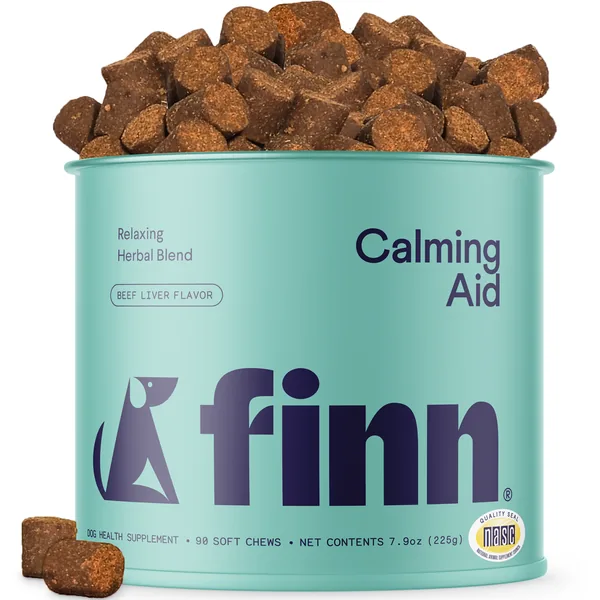 FinnCalming Aid | 40 mg | 80 mg | Check on Amazon |
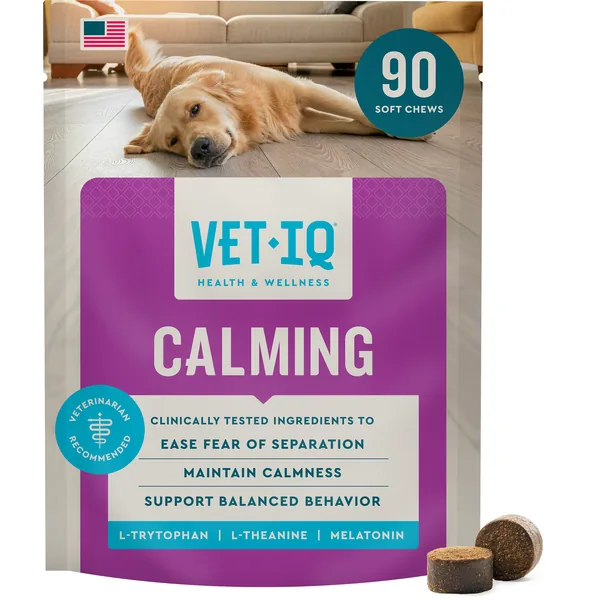 VetIQCalming SupportRead review → | 30 mg | 60 mg | Check on Amazon |
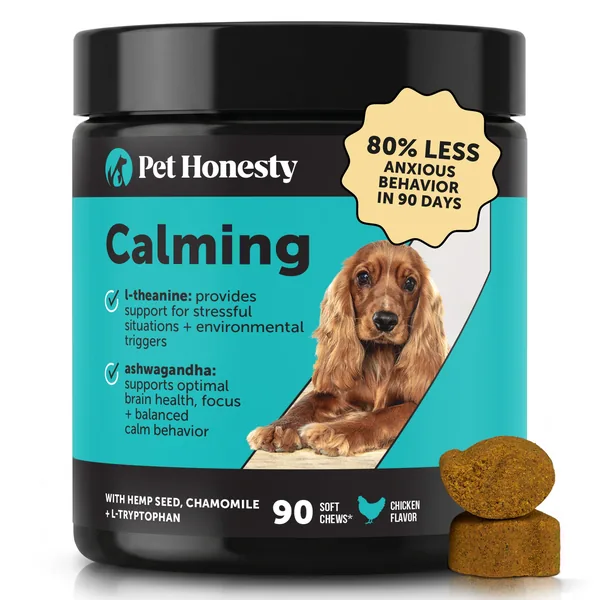 PetHonestyHemp Calming (Chicken)Read review → | 25 mg | 50 mg | Check on Amazon |
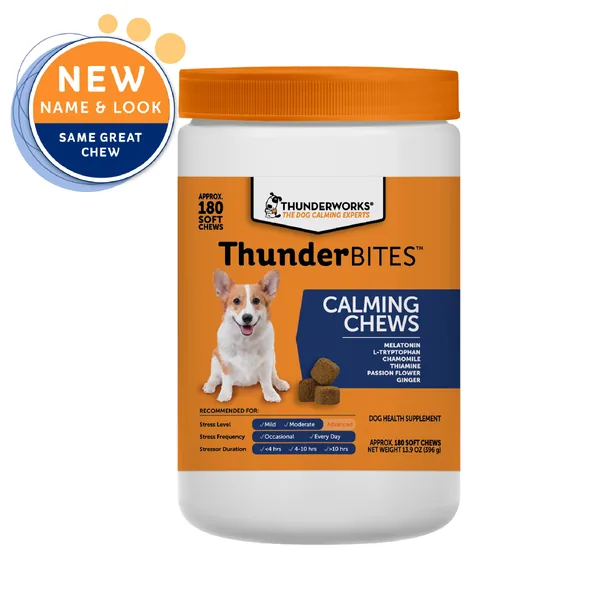 ThunderWorksThunderBites OriginalRead review → | 15 mg | 30 mg | Check on Amazon |
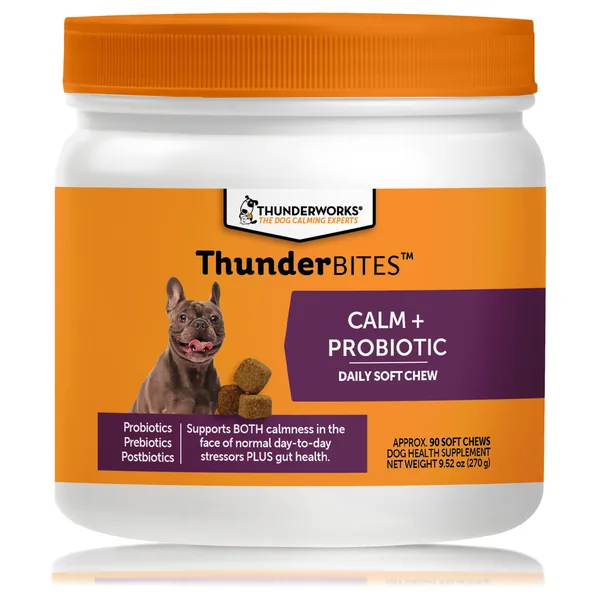 ThunderWorksThunderBites Calm + ProbioticRead review → | 15 mg | 30 mg | Check on Amazon |
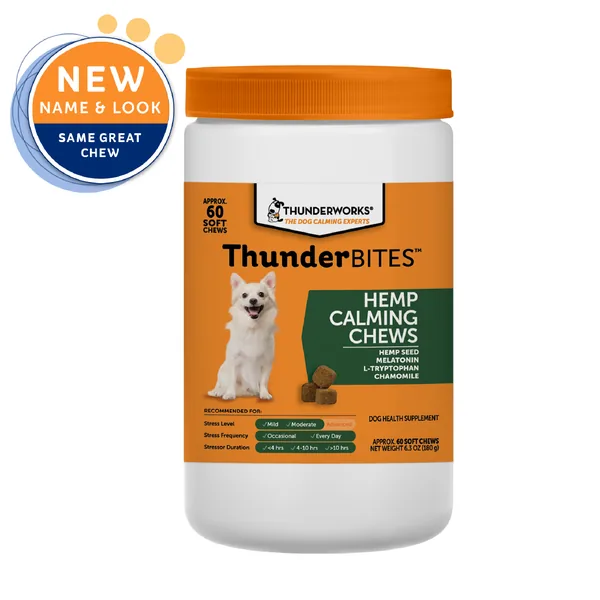 ThunderWorksThunderBites HempRead review → | 15 mg | 30 mg | Check on Amazon |
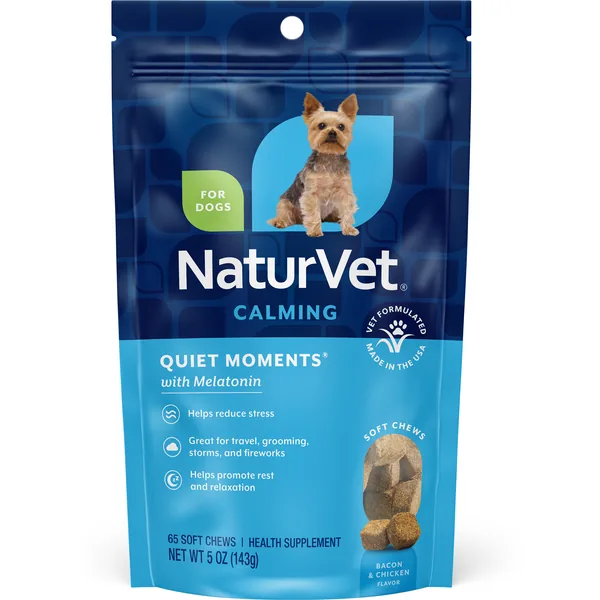 NaturVetQuiet MomentsRead review → | 15 mg | 30 mg | Check on Amazon |
*Using each label's own weight chart. "—" means the dosing chart is not published in text form.
Sources
- DeNapoli JS, Dodman NH, Shuster L, et al. Effect of dietary protein content and tryptophan supplementation on dominance aggression, territorial aggression, and hyperactivity in dogs. JAVMA. 2000;217(4):504-508.
- Bosch G, Beerda B, et al. Dietary tryptophan supplementation in privately owned mildly anxious dogs. Appl Anim Behav Sci. 2009.
- In adult dogs is supplementary tryptophan in the diet effective in reducing signs of anxiety? Critically appraised topic. 2025.
- Investigating the effects of incremental conditioning and supplemental dietary tryptophan on sled dogs. PLOS ONE. 2020.
- Bosch G, et al. Can diet composition affect behaviour in dogs? Wageningen University.
- Merck Veterinary Manual. Toxicoses in animals from human antidepressants, anxiolytics, and sleep aids.
Frequently asked questions
Does tryptophan calm dogs?
The evidence is mixed. A 2000 study found less territorial aggression when tryptophan was added to a low-protein diet, but a 2009 placebo-controlled trial in mildly anxious pet dogs found no significant effect. A 2025 review concluded tryptophan alone is not enough to treat anxiety, though it may support other approaches.
How much L-tryptophan can I give my dog?
There is no established weight-based supplement dose in veterinary references such as Merck or VCA. Studies added tryptophan to the whole diet rather than giving a fixed mg dose. The chews we track list about 15 to 40 mg each, so ask your vet what amount fits your dog.
Is tryptophan safe with trazodone or fluoxetine?
Not without your vet's approval. Trazodone, fluoxetine, clomipramine, and similar drugs raise serotonin, and adding tryptophan could increase the risk of serotonin syndrome. Signs include agitation, tremors, vomiting, high temperature, and seizures. Contact your vet immediately if you see them.
Is turkey a good source of tryptophan for dogs?
Turkey contains tryptophan, but no more than many other proteins, and the protein in a meal also brings competing amino acids that limit how much tryptophan reaches the brain. A turkey-flavored chew does not guarantee a meaningful tryptophan amount; check the mg listed on the label.
What is the difference between L-tryptophan and 5-HTP for dogs?
L-tryptophan is an amino acid found in all complete dog foods. 5-HTP is the next step toward serotonin and acts more directly, so it carries a higher risk of serotonin syndrome. Accidental 5-HTP ingestions have poisoned dogs, so avoid products with 5-HTP unless your vet approves.