What L-theanine is and how it may work
L-theanine is a non-protein amino acid found in tea leaves (Camellia sinensis). Suntheanine is a trademarked, purified form made by fermentation and is the version named on many pet supplement labels, including Virbac's Anxitane.
The proposed mechanism comes mostly from rodent and human research. L-theanine crosses the blood-brain barrier and is thought to raise GABA, dopamine, and serotonin activity while dampening excitatory glutamate signaling. It is described as calming without heavy sedation, which is why it shows up in daytime chews. Treat these mechanisms as plausible explanations, not proven effects in dogs.
What the dog studies actually show
Only a handful of dog studies exist, and all of them are small.
- Araujo et al., 2010 (Journal of Veterinary Behavior). A laboratory study of beagles selected for fear of unfamiliar people. Dogs received L-theanine (Anxitane) tablets and were compared with placebo. Treated dogs showed more interaction with a stranger. Limits: laboratory dogs, a small group, and funding linked to the product maker.
- Pike, Horwitz and Lobprise, 2015 (Journal of Veterinary Behavior). 18 dogs, all storm-sensitive pets, got Anxitane twice daily for at least 4 weeks. Owners reported fewer storm-related fear signs such as drooling, panting, pacing, and hiding. Limits: open label, no placebo group, owner-reported outcomes. Storm seasons vary a lot, so placebo effects on owners are a real concern.
- Michelazzi et al., 2010 (study abstract). L-theanine combined with behavior therapy in noise-phobic dogs. Because both were given together, the effect of L-theanine alone cannot be separated out.
A 2023 review of noise-fear treatments in Animals (Animals) rated the evidence for L-theanine as limited and called for larger controlled trials. Our reading: L-theanine is reasonable to discuss with a vet for mild, situational stress, but it is not a replacement for behavior work or prescription medication in dogs with moderate to severe fear.
Dose ranges by dog weight
There is no official FDA-approved dose for L-theanine in dogs. The most widely used reference is the Anxitane label, which is also what the studies above used.
| Dog weight | L-theanine per dose | Frequency | Source |
|---|---|---|---|
| Under 10 kg (22 lb) | ½ of 50 mg tablet (25 mg) | Twice daily | Virbac Anxitane (US) |
| About 10–25 kg (22–55 lb) | ½ of 100 mg tablet (50 mg) | Twice daily | Virbac Anxitane (US) |
| Over 25 kg (55 lb) | 1 × 100 mg tablet | Twice daily | Virbac Anxitane (US) |
Exact band edges vary by country label.
The laboratory study by Araujo used Anxitane tablets in beagles. Over-the-counter chews we track list about 8.5 to 50 mg per chew (ThunderBites Calm + Probiotic: 30 mg; the original ThunderBites chew has none) with feeding directions of 1 to 4 chews per day by weight, so the daily total can end up well above or below the Anxitane schedule. Check the per-chew amount and multiply.
Onset and duration
The Anxitane label gives L-theanine twice daily. The Pike study evaluated dogs after at least 4 weeks of daily use. Some owners give a dose a few hours before an event, but there is little dog data on single-dose use. Think of it as a daily supplement rather than a one-time rescue.
Safety, side effects, and interactions
- No significant side effects were reported in the dog studies above, and L-theanine is generally considered low risk.
- Mild stomach upset or drowsiness is possible, as with most supplements.
- Interactions are not well studied in dogs. Because it may influence GABA and serotonin activity, ask your vet before combining it with sedatives, anti-anxiety drugs such as fluoxetine, clomipramine, or trazodone, or blood pressure medication.
- There is no safety data for pregnant or nursing dogs or very young puppies.
- Check the other ingredients. Many chews combine L-theanine with melatonin, tryptophan, hemp, or chamomile, and each has its own cautions.
Sudden anxiety, aggression, or changes in sleep can be signs of pain, thyroid disease, or cognitive decline. A vet visit should come before a supplement in those cases.
Ask your vet first. Talk to your veterinarian before starting any calming supplement, especially if your dog takes medication, is pregnant or nursing, is a puppy, or has liver, kidney, or other health conditions. This page is label research written by researchers, not veterinarians, and it is not a substitute for an exam.
How to read a chew label for L-theanine
- Find the mg per chew, not per serving. Some labels list a serving as 2 chews. Divide to get the amount per chew.
- Look for the name. L-theanine, Suntheanine, or green tea extract. If only green tea extract is listed, the actual L-theanine content is unknown unless a percentage is given.
- Watch for mg vs mcg. L-theanine is dosed in milligrams. A figure in micrograms (mcg) would be 1,000 times smaller and not a meaningful dose.
- Beware of proprietary blends. A blend listing only a total weight hides how much L-theanine is inside.
- Look for the NASC Quality Seal, which indicates the company passed audits by the National Animal Supplement Council. It does not prove the product works.
Which calming chews contain it
The table below lists calming chews whose labels declare L-theanine, sorted by milligrams per chew.
| Chew | Per chew | Per day, 40 lb dog* | |
|---|---|---|---|
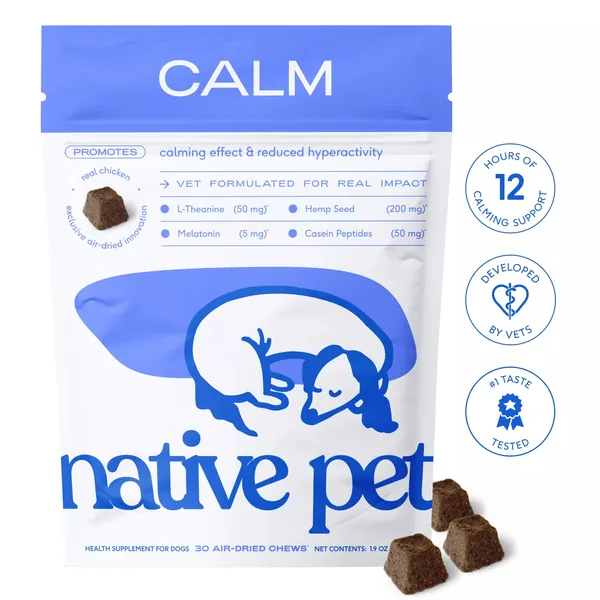 Native PetCalm Chews | 50 mg | 100 mg | Check on Amazon |
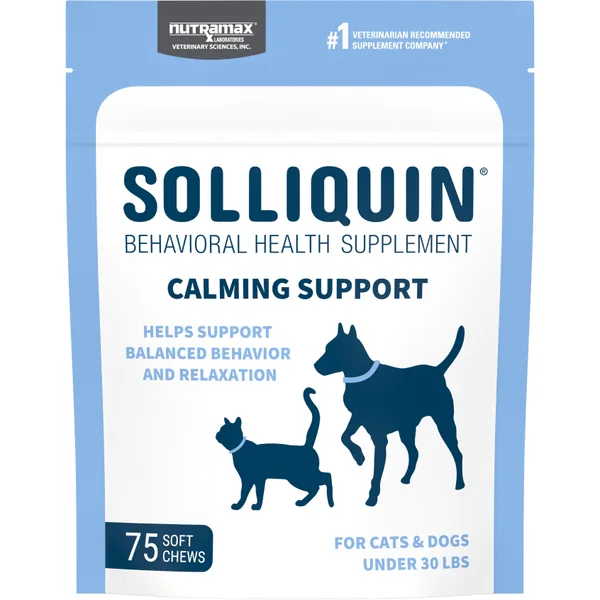 NutramaxSolliquin Small/MediumRead review → | 35 mg | — | Search on Amazon |
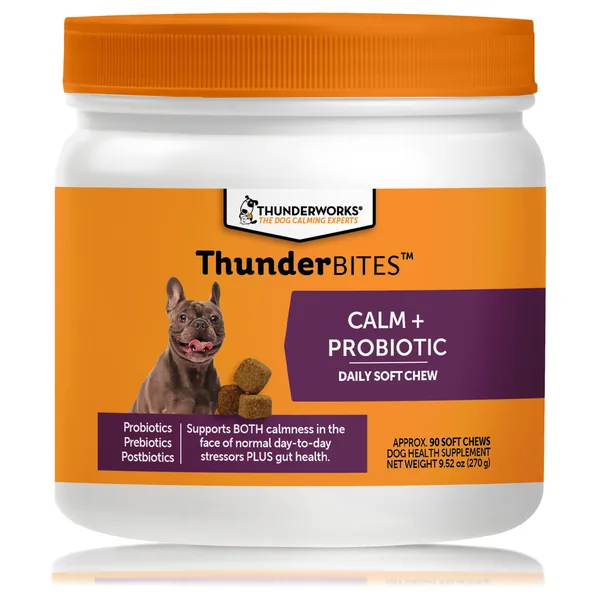 ThunderWorksThunderBites Calm + ProbioticRead review → | 30 mg | 60 mg | Check on Amazon |
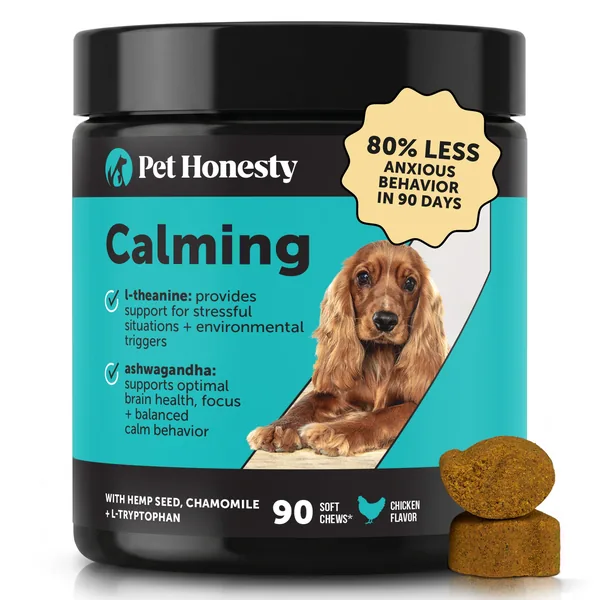 PetHonestyHemp Calming (Chicken)Read review → | 30 mg | 60 mg | Check on Amazon |
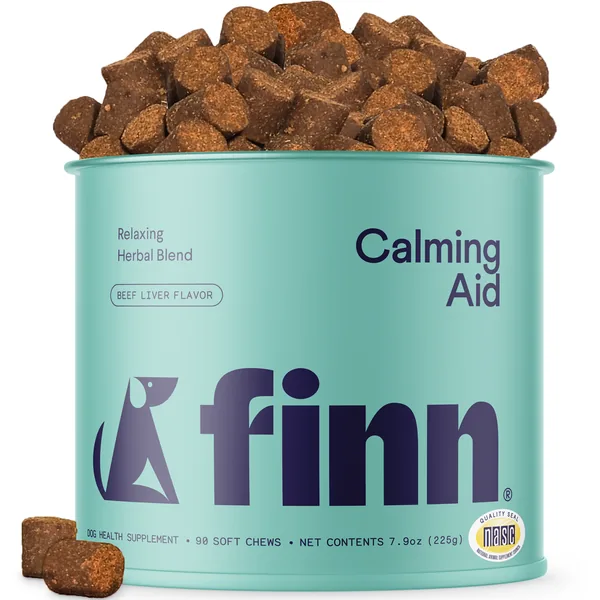 FinnCalming Aid | 25 mg | 50 mg | Check on Amazon |
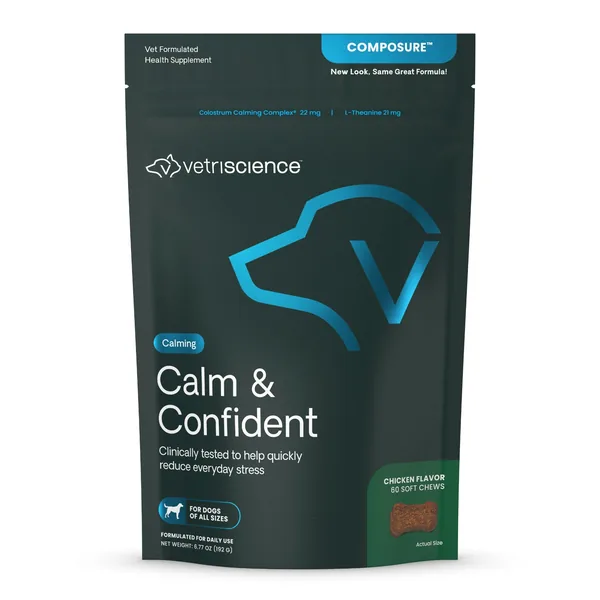 VetriScienceCalm & Confident (Composure)Read review → | 21 mg | 21 mg | Search on Amazon |
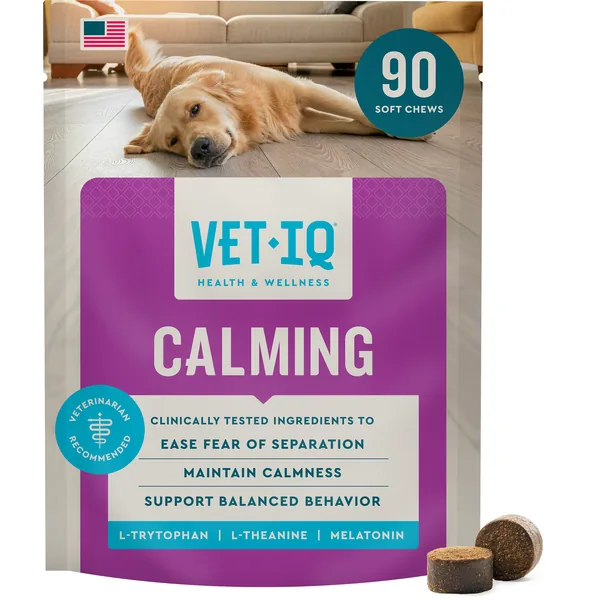 VetIQCalming SupportRead review → | 20 mg | 40 mg | Check on Amazon |
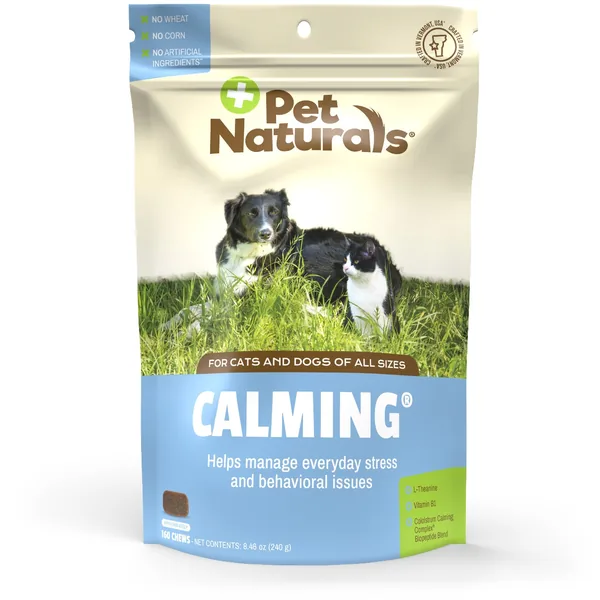 Pet NaturalsCalming | 8.5 mg | 8.5 mg | Check on Amazon |
*Using each label's own weight chart. "—" means the dosing chart is not published in text form.
Sources
- Araujo JA, et al. Anxitane tablets reduce fear of human beings in a laboratory model of anxiety-related behavior. J Vet Behav. 2010.
- Pike AL, Horwitz DF, Lobprise H. An open-label prospective study of the use of L-theanine (Anxitane) in storm-sensitive client-owned dogs. J Vet Behav. 2015.
- Michelazzi M, et al. Effectiveness of L-theanine and behavioral therapy in the treatment of noise phobias in dogs. J Vet Behav. 2010.
- Therapy and prevention of noise fears in dogs: a review of the current evidence for practitioners. Animals. 2023.
- Virbac US. Anxitane chewable tablets (S = 50 mg, M/L = 100 mg).
- Virbac. Anxitane for dogs and cats: product information and dosing.
- Today's Veterinary Practice. Storm phobia in dogs.
Frequently asked questions
How much L-theanine can I give my dog?
The Virbac Anxitane label uses: under 10 kg (22 lb): ½ of 50 mg tablet; about 10–25 kg (22–55 lb): ½ of 100 mg tablet; over 25 kg (55 lb): 1 × 100 mg tablet, twice daily (exact band edges vary by country label). Over-the-counter chews vary, so check the mg per chew and confirm the daily total with your veterinarian first.
How long does it take for L-theanine to work in dogs?
The Anxitane label gives it twice daily. The storm study in pet dogs judged results after at least 4 weeks. Some owners see changes sooner, but there is little research on single doses given right before an event.
Is L-theanine safe for dogs?
In the small dog studies published so far, no significant side effects were reported, and it is generally considered low risk. Mild stomach upset is possible. Safety in pregnant dogs and puppies is not established, and interactions with anxiety medications are not well studied, so ask your vet first.
Is human L-theanine OK for dogs?
Human capsules often contain 100 to 200 mg, which can be more than a small dog needs, and some include caffeine, xylitol, or other herbs. Xylitol is toxic to dogs. If your vet approves a human product, they should confirm the dose and every other ingredient on the label.
Does L-theanine make dogs sleepy?
L-theanine is generally described as calming without strong sedation, which is why it is used in daytime chews. Drowsiness is possible but was not a notable finding in dog studies. If a chew makes your dog very sleepy, check whether it also contains melatonin or other sedating ingredients.