What it is and how it is supposed to work
- Colostrum Calming Complex (C3). A patented blend of peptides derived from bovine colostrum. VetriScience proposes that these peptides have a calming effect and support cognitive function (VetriScience C3 white paper; VetriScience product page). The exact mechanism has not been shown in published peer-reviewed dog studies.
- Thiamine (vitamin B1). An essential B vitamin used in carbohydrate metabolism and nerve function. Deficiency in dogs causes neurological signs, and complete dog foods must meet a minimum requirement (Merck Veterinary Manual). The idea in calming chews is support of normal nervous system function, not sedation.
- L-theanine. A green tea amino acid often paired with the two. It is covered on our L-theanine page.
What dog studies actually show
Composure field trial, 2008
VetriScience ran an open field trial from April to August 2008 in 30 dogs and 10 cats with known stress responses to triggers like storms or travel (VetriScience field trial report). Owners rated 21 of 30 dogs as "very effective." Limits:
- Funded and reported by the manufacturer.
- No placebo group and no blinding, so owner expectation could explain much of the effect.
- Owner ratings rather than validated behavior or cortisol measures.
- Published as a company document, not in a peer-reviewed journal.
C3 white paper studies
The company's C3 white paper summarizes in-house work, including laboratory animal studies on the colostrum peptides and the claim that Composure works within 30 minutes and lasts up to 4 hours (C3 white paper). These were funded by VetriScience. We did not find an independent, peer-reviewed, placebo-controlled trial of C3 in dogs.
Thiamine alone
We found no controlled study testing thiamine as a stand-alone calming agent in dogs. Its role in these chews rests on general nutrition science, not anxiety trials.
How this compares
For context, prescription options such as trazodone have shown effects in placebo-controlled noise-fear work, such as the 2020 study where trazodone reduced fear responses in 16 dogs (Morris et al., 2020). The colostrum and thiamine evidence is weaker by comparison.
Dose figures
- Composure / Calm & Confident label directions: 1 chew daily for dogs up to 50 lb, 2 chews for 51 to 100 lb, 3 chews for 101 lb and up (VetriScience).
- The label allows doubling or tripling during periods of heightened stress (VetriScience).
- Calm & Confident (Composure formula) label, per chew: thiamine 134 mg, Colostrum Calming Complex 22 mg, L-theanine 21 mg (VetriScience). These amounts are set by the manufacturer, not by an anxiety study.
No independent study has set an effective milligram dose of C3 or thiamine for anxiety in dogs.
Onset
The manufacturer states effects typically start within 30 minutes and last up to 4 hours (VetriScience). This comes from company studies. For a known event, the label timing of 30 to 60 minutes ahead is reasonable to follow.
Safety, interactions and who should avoid it
- Thiamine is water-soluble, and excess is excreted in urine. Toxicity from oral supplements is not a recognized problem in dogs at chew-level amounts.
- Colostrum is a dairy protein. Dogs with beef or dairy allergies, or on an elimination diet, may react.
- Interactions. No serious interactions are documented, but no study has tested these chews alongside fluoxetine, clomipramine, trazodone or gabapentin. Tell your vet what you give.
- Ask first for pregnant or nursing dogs, puppies, and dogs with kidney disease or other health conditions.
- Chews contain flavorings and calories. Watch total treat intake in small dogs.
How to read the label
- "Colostrum Calming Complex" or "C3" is the trademarked VetriScience ingredient. A plain "colostrum" listing is a different, non-trademarked ingredient with no Composure-specific data.
- Look for milligrams per chew of C3, L-theanine and thiamine.
- Note whether the brand cites its own studies or independent ones, and whether those are peer-reviewed.
- Check for the NASC Quality Seal and a lot number.
Which calming chews contain it
The table below lists calming chews whose labels include thiamine or colostrum, with milligrams per chew where stated.
| Chew | Per chew | Per day, 40 lb dog* | |
|---|---|---|---|
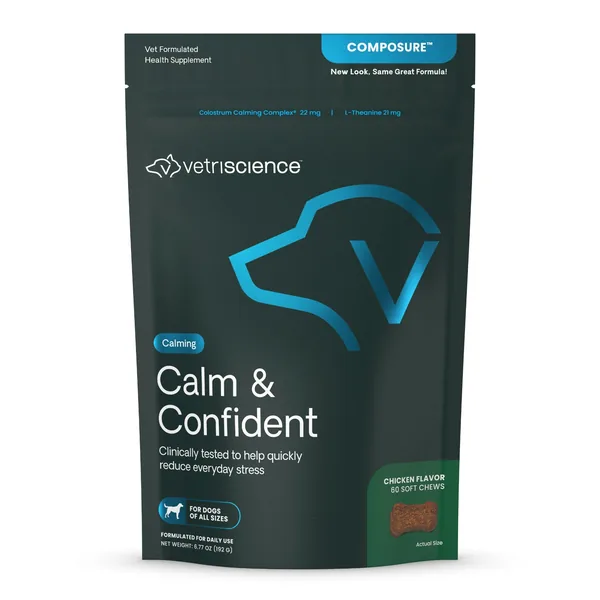 VetriScienceCalm & Confident (Composure)Read review → | 134 mg | 134 mg | Search on Amazon |
 Pet NaturalsCalming | 65 mg | 65 mg | Check on Amazon |
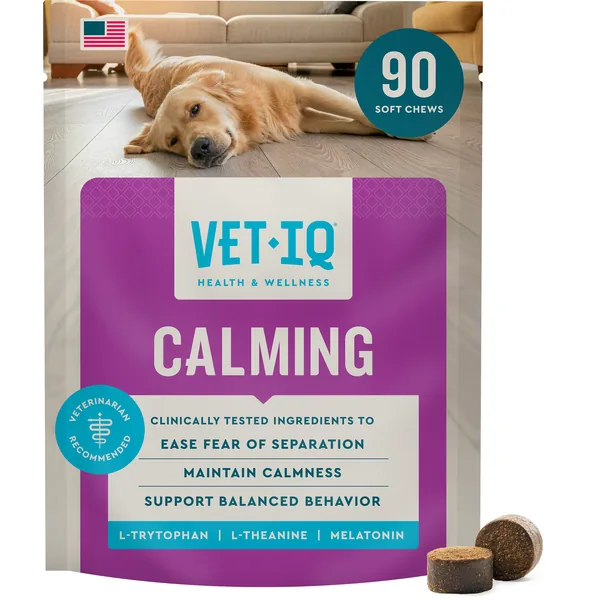 VetIQCalming SupportRead review → | 60 mg | 120 mg | Check on Amazon |
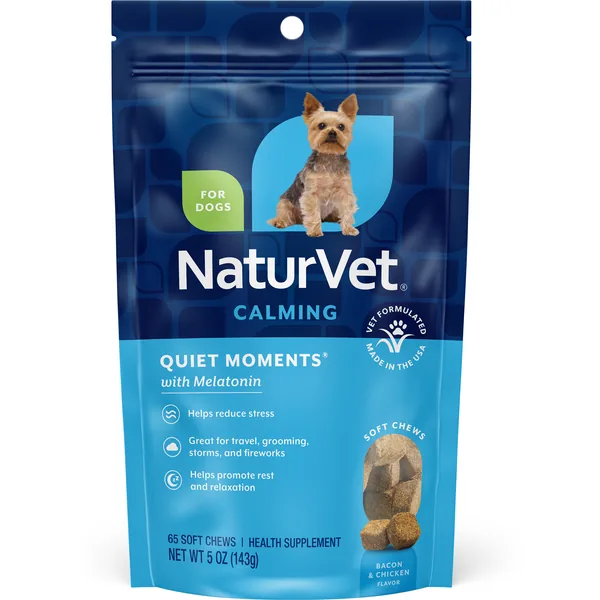 NaturVetQuiet MomentsRead review → | 50 mg | 100 mg | Check on Amazon |
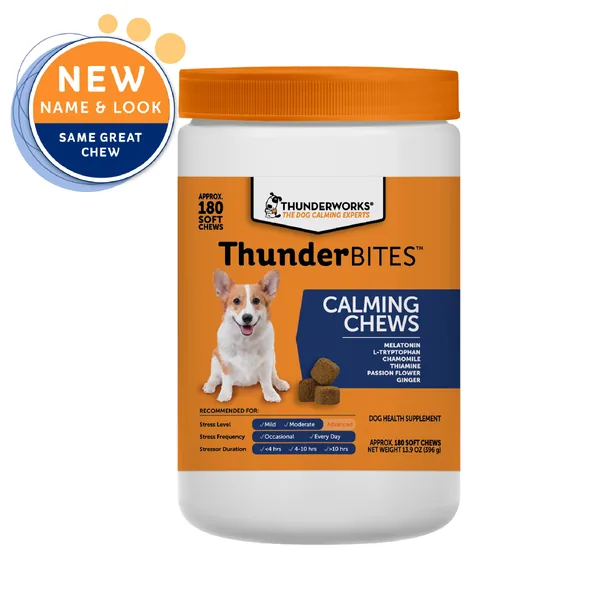 ThunderWorksThunderBites OriginalRead review → | 25 mg | 50 mg | Check on Amazon |
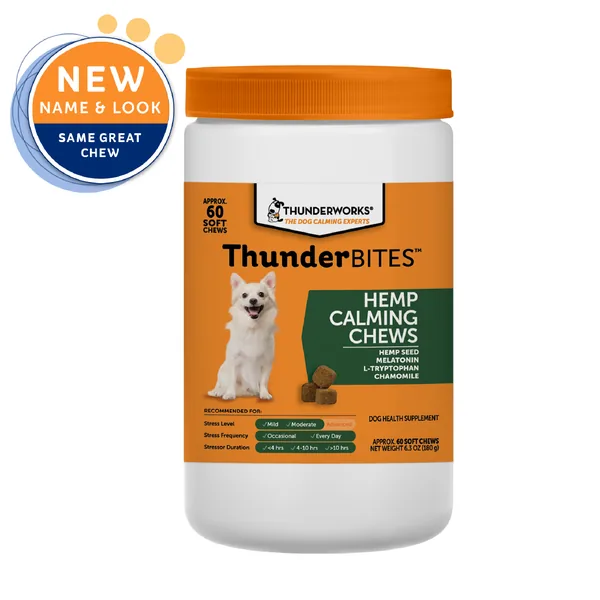 ThunderWorksThunderBites HempRead review → | 25 mg | 50 mg | Check on Amazon |
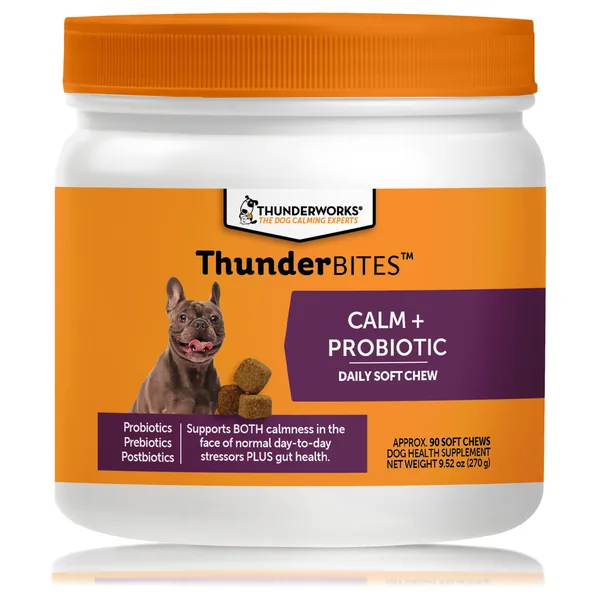 ThunderWorksThunderBites Calm + ProbioticRead review → | 0.5 mg | 1 mg | Check on Amazon |
*Using each label's own weight chart. "—" means the dosing chart is not published in text form.
Check with your veterinarian before using any calming chew, especially if your dog takes medication, is pregnant, or has a health condition.
Frequently asked questions
What is Colostrum Calming Complex?
Colostrum Calming Complex (C3) is a patented blend of peptides taken from bovine colostrum, the first milk a cow produces. VetriScience uses it in Composure, now sold as Calm & Confident. The company proposes that the peptides have a calming effect, but the supporting research is mostly its own and has not been widely replicated.
How long does Composure take to work in dogs?
VetriScience states its chews typically work within 30 minutes and last up to 4 hours, based on company studies. Those figures have not been confirmed in independent, peer-reviewed dog trials. For a predictable event like fireworks, giving it 30 to 60 minutes ahead matches the label directions.
Can I give my dog thiamine for anxiety?
There is no controlled dog study showing thiamine alone reduces anxiety. Dogs need thiamine for normal nerve function, and complete dog foods must supply it. The amount in calming chews is considered low-risk because excess is excreted in urine, but it is unlikely to be the active calming part on its own.
Is colostrum safe for dogs with dairy allergies?
Colostrum is a bovine dairy product, so dogs with a confirmed beef or dairy protein allergy may react to it. Signs can include itching, ear problems, vomiting or diarrhea. Ask your vet before using a colostrum-based chew if your dog is on an elimination diet or has a known food allergy.
Is Composure safe with Prozac or trazodone?
VetriScience markets the product for use alongside behavior plans, and its ingredients have no well-documented serious drug interactions. Still, no published study has tested it with fluoxetine or trazodone. Tell your vet about every supplement before your dog starts or changes a prescription.
Sources
- VetriScience Laboratories. Field trial of Composure products with the new Colostrum Calming Complex (C3). 2008.
- VetriScience Laboratories. Understanding C3, Colostrum Calming Complex (white paper).
- VetriScience. Calm & Confident (formerly Composure) calming chews for dogs, product page.
- Merck Veterinary Manual. Nutritional requirements of small animals.
- Morris EM et al. CBD treats and noise-induced fear, including trazodone arm. Front Vet Sci. 2020.