Two different problems hide under "car trouble": anxiety about the car and true motion sickness. VCA lists whining, pacing, drooling, lip licking, vomiting and defecation as signs of motion sickness, and notes that dogs who ride only once or twice a year often link the car with the stressful thing at the end of the trip. Calming chews may take the edge off the anxiety part. They do not stop nausea.
Our picks
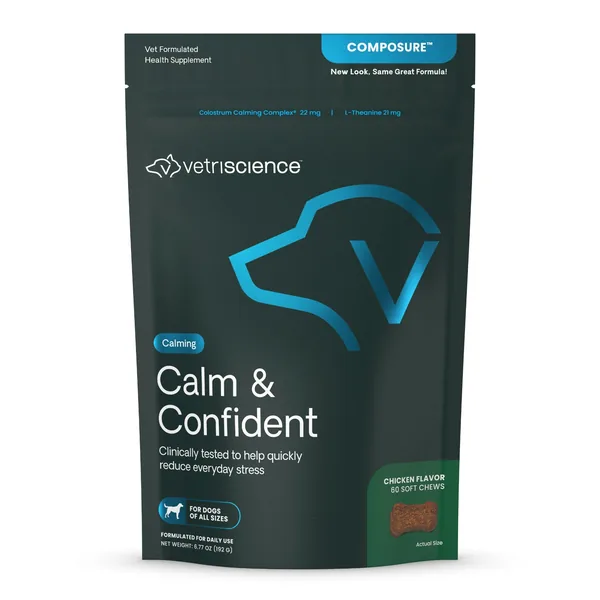
VetriScience Composure
Composure lists 21 mg L-theanine, 134 mg thiamine and 22 mg colostrum calming complex per chew and contains no melatonin, which suits daytime errands, vet visits and drives where you want an alert dog at the other end. Dosing is simple: one chew up to 50 lb, two up to 100 lb. It is now sold as Calm & Confident (Composure formula), and we have high confidence in these label amounts.
- L-theanine
- 21 mg
- Thiamine (B1)
- 134 mg
Chews per day by weight: 0–50 lb: 1 · 51–100 lb: 2 · 101+ lb: 3 · 60 per jar
Search on AmazonPer chew, from the manufacturer label. Check the package before buying; formulas change.
Pet Naturals Calming
Pet Naturals is the most transparent label in this group (high confidence, from the manufacturer page): 8.5 mg L-theanine, 65 mg thiamine and 9 mg colostrum per chew, also with no melatonin. The label permits doubling or tripling during stress, which helps on a long drive. The modest theanine amount means effects may be mild.

- L-theanine
- 8.5 mg
- Thiamine (B1)
- 65 mg
Chews per day by weight: 0–50 lb: 1 · 51+ lb: 2 · 160 per jar
Check on AmazonPer chew, from the manufacturer label. Check the package before buying; formulas change.
Nutramax Solliquin (Small to Medium Dogs)
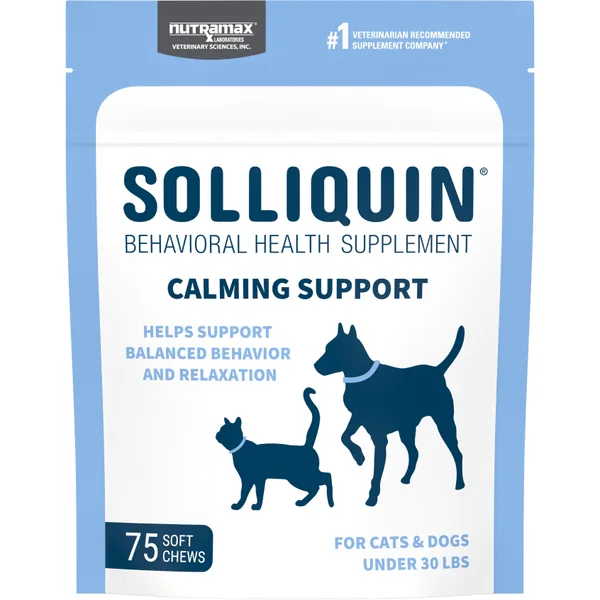
Solliquin pairs 35 mg L-theanine with 75 mg magnolia and phellodendron extracts and a whey protein ingredient, with dosing that starts at half a chew for dogs up to 8 lb. That granularity is useful for small dogs who ride on a lap or in a carrier. There is a separate large-dog version with higher amounts, so buy by your dog's weight. The small/medium chart is under 8 lb half a chew, 8 to 15 lb one chew, 16 to 30 lb two chews (confirmed on the maker's page).
- L-theanine
- 35 mg
Also: Magnolia officinalis + Phellodendron amurense extracts 75mg, dried whey protein concentrate 25mg
Chews per day by weight: 0–8 lb: 0.5 · 9–15 lb: 1 · 16–30 lb: 2 · 75 per jar
Search on AmazonPer chew, from the manufacturer label. Check the package before buying; formulas change.
Finn Calming Aid
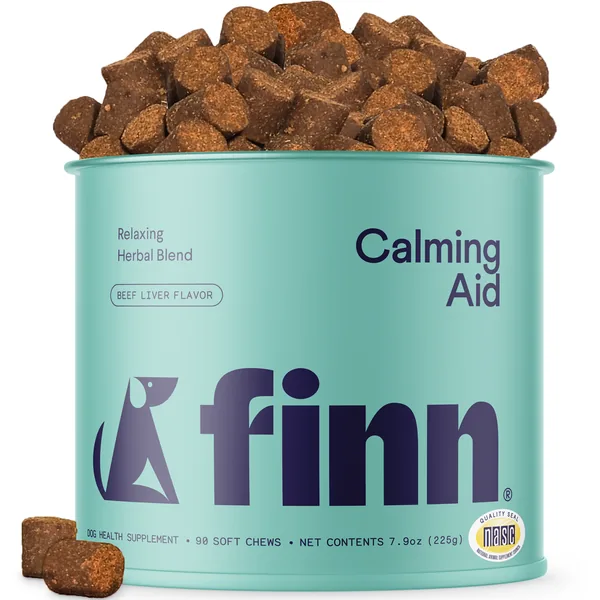
Finn discloses every amount, including 1 mg melatonin and 25 mg L-theanine per chew, and tells you to give it 30 to 60 minutes before the stressor. For long road trips or a dog that settles best when sleepy, that timing fits well. Skip it if you need your dog alert on arrival, and read our melatonin guide for cautions.
- L-theanine
- 25 mg
- Melatonin
- 1 mg
- L-tryptophan
- 40 mg
- Chamomile
- 20 mg
Also: organic passion flower 125mg, valerian root 35mg, organic ginger root 25mg
Chews per day by weight: 0–25 lb: 1 · 26–50 lb: 2 · 51–75 lb: 3 · 76+ lb: 4 · 90 per jar
Check on AmazonPer chew, from the manufacturer label. Check the package before buying; formulas change.
How we chose
We are label researchers, not veterinarians, and we have not given these chews to dogs. For car travel we favored products with fully or mostly disclosed amounts, medium or high data confidence, dosing that works on short notice, and at least one melatonin-free option for daytime use. We did not make ThunderBites a top pick here. The original ThunderBites Calming Chews do contain ginger (25 mg per chew) and are labeled for 30 minutes before a stressful situation, but they also contain melatonin (10 mcg per chew), and the ginger amount is small. ThunderBites Calm + Probiotic is a daily chew with 1.5 mg melatonin per chew, which is not what most owners want for a short daytime drive. Ratings and prices were not used.
Car travel plan
- Weeks before a big trip. Build tolerance in steps, as the AKC suggests: sit in the parked car with treats, then start the engine, then drive to the end of the street, then to somewhere fun like a park. Keep sessions short and end before your dog gets worried.
- Days before. If you plan to use a daily-style chew, start it now at the label dose to check for stomach upset.
- Trip day. Withhold food for several hours before the trip. VCA says up to 8 hours. Offer water. If a chew must go down with food, use the smallest bite you can. Give an event chew 30 to 60 minutes before departure. Secure your dog in a crash-tested crate or harness, face it forward if possible, crack a window for fresh air, and keep the car cool.
- On the road. Stop every two to three hours for a short walk and water. Never leave your dog alone in a parked car.
Ask your vet if your dog vomits on most rides, if anxiety keeps getting worse, or before a long move or flight. VCA notes vets can prescribe anti-nausea drugs for motion sickness and medications such as trazodone or gabapentin for travel anxiety. Call promptly if your dog seems heavily sedated, keeps vomiting after the trip, or shows signs of heat stress such as heavy panting and weakness.
Anxiety or nausea: how to tell
Watch when the signs start. A dog that pants, whines or refuses to jump in before the engine starts is mostly anxious about the car itself, and gradual practice plus a calming chew is a sensible first step. A dog that is fine at first but starts drooling, lip licking and going quiet after ten or twenty minutes of driving is more likely nauseous. That second dog needs a vet conversation about anti-nausea medication, because no chew in this guide is designed to settle the stomach. Many dogs have both, and treating the nausea often makes the anxiety easier to fix over time.
Related reading: L-theanine, thiamine and colostrum, and botanicals including ginger and valerian.
Frequently asked questions
Do calming chews help with car sickness?
Not directly. The chews here target stress, and none is labeled as an anti-nausea product. Some contain ginger, but the amounts are small and the canine evidence is weak. If your dog vomits in the car, ask your vet about anti-nausea medication. VCA lists maropitant (Cerenia), meclizine and dimenhydrinate. Your vet picks the drug and dose.
How long before a car ride should I give a calming chew?
Most event-style labels say 30 to 60 minutes before the stressor, which matches Finn's instructions. Do not feed a meal first. VCA advises withholding food for several hours (up to 8) before the trip and offering water. If the chew must go down with food, use the smallest bite. For theanine and colostrum chews, a few days of daily use before a long trip is reasonable.
Will my puppy outgrow car sickness?
Often, yes. VCA notes motion sickness is more common in young dogs because the balance parts of the inner ear are still developing, and many puppies outgrow it by about a year old. Short, positive practice trips help prevent a lasting link between the car and feeling sick or scared.
Is a drowsy dog in the car a problem?
A calm, sleepy passenger is fine if the dog is secured in a crash-tested crate or harness. Heavy sedation is different: a dog that cannot stand or stay upright should not be given more product. Stop and call your vet if your dog seems very wobbly, confused or hard to rouse.
Sources
- VCA Animal Hospitals: Motion Sickness in Dogs
- VCA Animal Hospitals: Road Trips and Car Travel With Your Dog
- AKC: Teach Your Dog to Ride in the Car
- Therapy and Prevention of Noise Fears in Dogs: a review of the current evidence (Animals, 2023)
- Product label data: manufacturer and retailer listings as recorded in our brand database (confidence level noted per product).