ThunderWunders and ThunderBites: same product, new name
If you are searching for "Thunder Wunders calming chews side effects," you are almost certainly looking at the product now sold as ThunderBites. The ThunderWorks product page (the company behind the ThunderShirt) is titled "ThunderBites (Formerly ThunderWunders)," and it lists the same active ingredients the older bags carried: thiamine, L-tryptophan, melatonin, ginger, passion flower and chamomile. Some older listings still show the original name. Do not confuse it with ThunderBites Calm + Probiotic, a separate daily chew with 1.5 mg of melatonin per chew.
What we could not verify is whether the formula changed in any small way at the rename, such as the flavor, the inactive ingredients or the chew size. We have not compared an old bag's panel with a current one line by line. If you have an old bag at home, compare its Supplement Facts panel with a current one before mixing them. For a fuller comparison of the product lines, see our ThunderBites vs ThunderWunders page.
 Original
10 mcg melatonin, 15 mg L-tryptophan, 50 mg chamomile, 25 mg thiamine per chew
- Dose by weight
- Up to 26 lb: 1 · 27–50 lb: 2 · 51–99 lb: 4 · 100+ lb: 6
- How to use
- As needed, 30 min before the stressor
 Hemp
Same actives as Original plus 75 mg hemp seed oil and 75 mg hemp seed powder (not CBD)
- Dose by weight
- Up to 26 lb: 1 · 27–50 lb: 2 · 51–99 lb: 4 · 100+ lb: 6
- How to use
- As needed, 30 min before the stressor
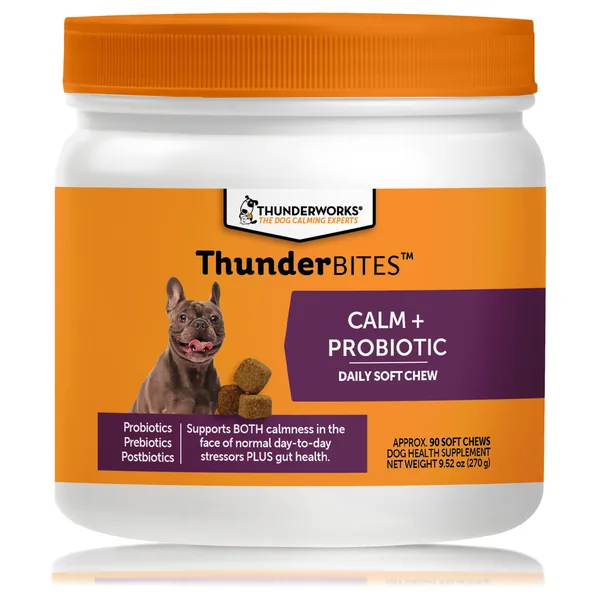 Calm + Probiotic
1.5 mg melatonin, 30 mg L-theanine, 150 mg ashwagandha, 3 billion CFU per chew
- Dose by weight
- Up to 25 lb: 1 · 26–50 lb: 2 · 51–75 lb: 3 · 76–100 lb: 4
- How to use
- Daily, every day
From ThunderWorks labels (actives listed per 2 chews, shown here per chew). Ask your vet before giving Calm + Probiotic to small dogs, puppies, pregnant dogs or dogs on medication.
What the label contains
The label lists amounts per 2 chews: chamomile 100 mg, thiamine 50 mg, passion flower 50 mg, ginger 50 mg, L-tryptophan 30 mg and melatonin 20 mcg. The table halves them to show one chew.
| Active (per chew) | Listed amount | Role claimed |
|---|---|---|
| Melatonin | 0.01 mg (10 mcg) | Sleep-cycle hormone (very low dose) |
| L-tryptophan | 15 mg | Serotonin precursor |
| Chamomile | 50 mg | Herb with apigenin; traditional mild sedative |
| Thiamine (vitamin B1) | 25 mg | Vitamin B1; used in nerve and energy metabolism |
| Passion flower | 25 mg | Herb traditionally used for anxiety |
| Ginger | 25 mg | Stomach settling (useful for travel) |
Each chew has 0.01 mg (10 mcg) of melatonin, about 1/300 of a 3 mg dose. That low amount helps explain why most reported reactions to this kind of chew are mild. ThunderWorks says to give chews about 30 minutes before a stressful event, dose by weight using its chart (1 chew up to 26 lb, 2 at 27 to 50 lb, 4 at 51 to 99 lb, 6 at 100 lb and up), not to exceed double the recommended amount in 12 hours, and to use only in dogs 12 weeks and older.
Possible side effects, ingredient by ingredient
No published study tracks side effects of ThunderWunders or ThunderBites specifically, and we do not quote owner reviews or star ratings. The best guide is what veterinary sources say about each ingredient.
Melatonin
VCA Animal Hospitals lists sleepiness and weight gain as the common effects, plus possible changes in fertility. It usually takes effect in 1 to 2 hours and wears off within 24 hours, longer in dogs with liver or kidney disease. VCA also flags interactions with drugs such as benzodiazepines, warfarin, estrogens and ciprofloxacin. More detail is on our melatonin page.
L-tryptophan
Tryptophan is an amino acid found in ordinary dog food protein. A 15 mg addition per chew (30 mg per 2 chews) is small. The theoretical risk is extra serotonin when combined with drugs that also raise serotonin, such as fluoxetine, trazodone or clomipramine. The Merck Veterinary Manual describes serotonin syndrome signs (agitation, tremors, incoordination, diarrhea) in its discussion of serotonergic products. Ask your vet before adding any tryptophan supplement to those medications.
Chamomile
VCA lists skin irritation and stomach upset as mild effects, and allergic reactions (facial swelling, rash, labored breathing) as serious ones. Avoid it in dogs allergic to ragweed, daisies or related plants. VCA advises caution with NSAIDs, sedatives and warfarin.
Thiamine
Thiamine is a water-soluble B vitamin. The Merck Veterinary Manual notes that water-soluble vitamins have much less potential for toxicity because excess is not readily stored. Side effects at chew-level amounts are unlikely.
Passion flower
Passion flower is reported to have low toxicity in dogs, but can cause drowsiness or mild confusion. Sources advise against combining it with prescription sedatives and against use in pregnant or nursing dogs because safety has not been established.
Ginger
VCA lists stomach upset and skin irritation as mild effects. Ginger should be avoided in dogs with bleeding disorders and used cautiously with anticoagulants such as warfarin or NSAIDs such as carprofen and meloxicam, since it may add to bleeding risk.
What owners most often notice
Based on the ingredients, the plausible pattern is simple. Expect some extra sleepiness, an occasional soft stool or vomiting in dogs with sensitive stomachs, and, less commonly, itchiness or swelling from an herb allergy. Vomiting after a new chew is often about the chew itself (new flavor, eaten fast, empty stomach). Our concerns hub covers vomiting and palatability in more detail.
Who should avoid it or ask a vet first
- Puppies under 12 weeks (the manufacturer's own limit).
- Pregnant or nursing dogs: melatonin can affect fertility, and passion flower and ginger have no established safety in pregnancy.
- Dogs on serotonergic drugs (fluoxetine, trazodone, clomipramine, tramadol), sedatives, anticoagulants or NSAIDs.
- Dogs with liver or kidney disease, which may clear melatonin more slowly.
- Dogs with bleeding disorders, an upcoming surgery, or known plant allergies.
- Diabetic dogs or dogs on strict diets, since soft chews contain flavorings and binders; read the inactive ingredients.
What to do if your dog eats too many
- Pick up the bag and count how many chews are missing. Note your dog's weight.
- Call your veterinarian or the ASPCA Animal Poison Control Center at (888) 426-4435, staffed 24/7. A consultation fee may apply.
- Do not make your dog vomit unless a vet tells you to.
- Watch for heavy sedation, wobbliness, vomiting, diarrhea, agitation or tremors. Merck lists vomiting, lethargy, sedation and ataxia as the typical signs of melatonin overdose.
Because each chew has a small melatonin amount, a large-breed dog eating a few extra may only get sleepy. A small dog eating half a bag is a different matter, and the herbs and binders can upset the stomach on their own. Let a professional judge it.
Reading ThunderWunders reviews with care
Reviews posted under the old name and the new one describe the same chew, so pool them when you read. Keep in mind that a review cannot tell you whether a sleepy dog was reacting to the chew or simply tired after a storm, and that dog size changes the dose per pound a lot. Look for reports that mention the dog's weight, the number of chews and the timing.
Bottom line
ThunderWunders reviews you find online today are mostly reviews of the same chew now called ThunderBites. The ingredient list points to mild, short-lived side effects for most healthy adult dogs when the label dose is followed. The real risks are drug interactions and overdose in small dogs. If your dog takes any daily medication, ask your vet before the first chew.
Sources
- ThunderWorks: ThunderBites (Formerly ThunderWunders) product page
- VCA Animal Hospitals: Melatonin
- VCA Animal Hospitals: Chamomile
- VCA Animal Hospitals: Ginger
- Merck Veterinary Manual: Toxicoses from antidepressants, anxiolytics and sleep aids
- Merck Veterinary Manual: Nutritional requirements of small animals
- AnimalWised: Passionflower for dogs
- ASPCA Animal Poison Control Center
Frequently asked questions
Is ThunderWunders the same as ThunderBites?
Yes. ThunderWorks now sells the chews as ThunderBites, and its product page is titled "ThunderBites (Formerly ThunderWunders)." The listed actives are the same: thiamine, L-tryptophan, melatonin, ginger, passion flower and chamomile. We could not confirm whether inactive ingredients changed, so compare labels if you have an old bag.
Can ThunderWunders calming chews make my dog sleepy?
They can. Melatonin, passion flower and chamomile can all add mild drowsiness, although the melatonin amount per chew is small. Mild sleepiness during a storm is usually the intended effect. Heavy sedation, wobbling or trouble standing is not, and calls for a phone call to your vet.
Can calming chews cause diarrhea or vomiting in dogs?
Yes, occasionally. Chamomile and ginger can upset the stomach, and a new soft chew with flavorings may not agree with a sensitive dog. Try giving the chew with a small meal. If vomiting or diarrhea repeats or lasts more than a day, stop the chews and check with your vet.
How many ThunderWunders chews can I give in a day?
Follow the weight chart on your package. ThunderWorks says not to exceed double the recommended amount within a 12-hour period and to wait another 12 hours before giving more after a double dose. If you think your dog got more than that, call your vet or ASPCA Poison Control.