What the Label Actually Says
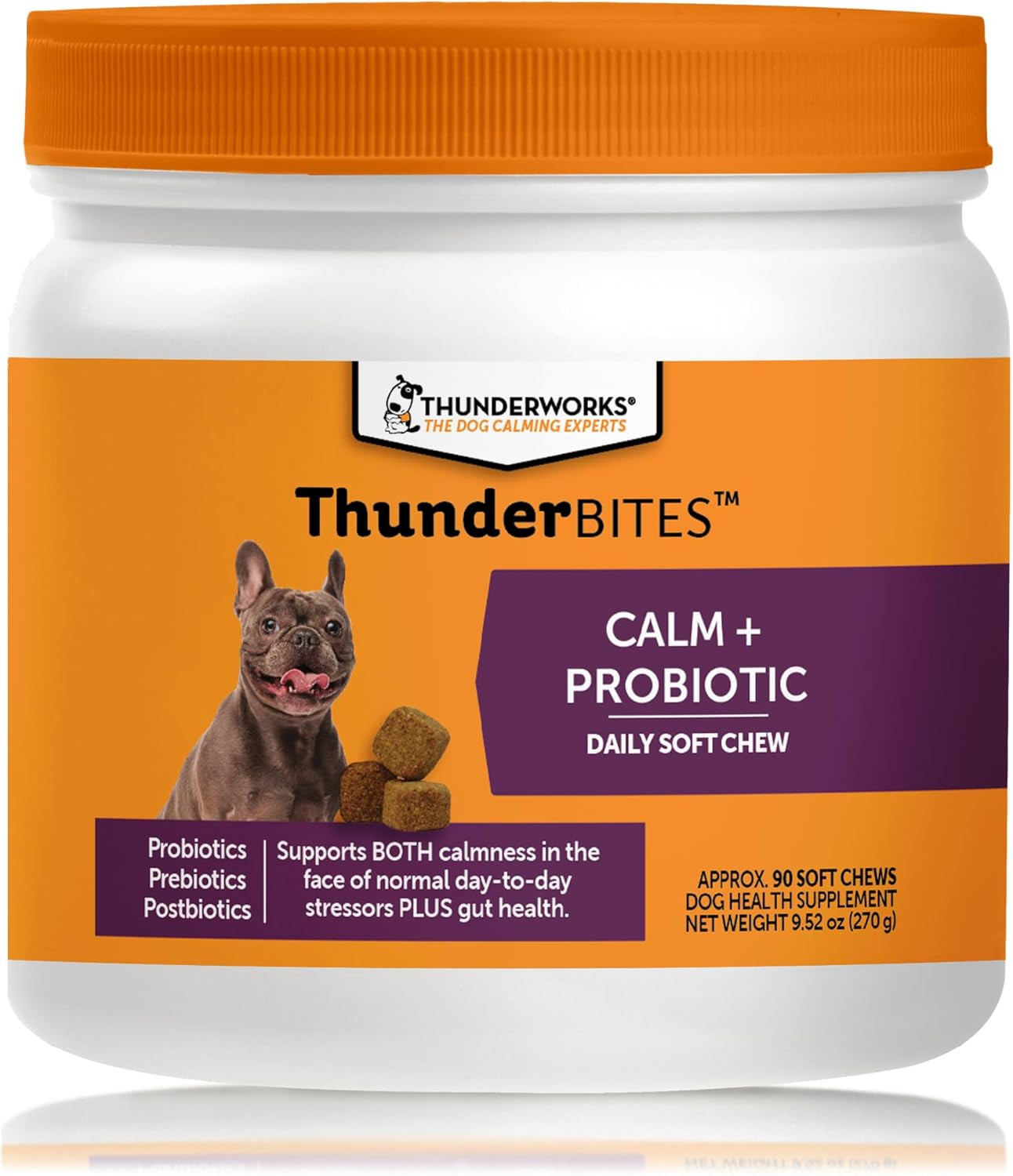
ThunderBites Calm + Probiotics is labeled for dogs 12 weeks of age and older. That line comes straight from the manufacturer, and it settles the core question: the maker does not intend the chews for puppies younger than 12 weeks. If your puppy hasn't reached that age, this product isn't the answer, whatever the stress at home looks like.
The calming side of the formula leans on ashwagandha, L-theanine, L-tryptophan, melatonin and thiamine (B1), plus ginger and chamomile, alongside a probiotic, prebiotic and postbiotic blend for gut support. Dosing runs by weight — a dog up to 25 pounds gets one chew a day — and the 12-week floor applies across the board regardless of how small the puppy is.
| Dog weight | Daily soft chews |
|---|---|
| Up to 25 lb | 1 chew |
| 26–50 lb | 2 chews |
| 51–75 lb | 3 chews |
| 76–100 lb | 4 chews |
Dosing per the manufacturer's weight chart. The 12-week age minimum applies at every weight.
Why 12 Weeks, and What We Don't Know
Here's the honest version, without invented lab data: the manufacturer sets 12 weeks as the minimum age, and a very young puppy's body handles supplements differently than an adult dog's. That's the reason to respect the cutoff — not any specific test result we can point to. When a company draws an age line like this, it usually reflects the population the product was formulated and intended for, not proof that a younger puppy would be harmed by a single chew.
The melatonin in the blend is a useful example of why caution makes sense. Veterinary sources are candid that melatonin's safety hasn't been well studied in very young dogs, and the American Kennel Club notes it generally isn't recommended for puppies under 12 weeks; a young, developing system may respond to a hormone-like supplement in ways an adult's won't, and it can be a concern for pups that aren't yet spayed or neutered. So the sensible read is simple: follow the label's 12-week minimum, and if you're weighing anything supplemental for a younger puppy, ask your vet first.
Related: -ThunderBites probiotic vs regular calming chews which better
What Actually Helps an Anxious Young Puppy
Supplements aren't the first tool for a puppy this age — and often they're not the tool at all. Much of what looks like anxiety in a young pup is normal development: adjusting to a new home, exploring, teething, or missing littermates. Start with your vet, who can tell the difference between ordinary settling-in and a real behavioral problem, and who can flag anything medical hiding behind the restlessness.
Beyond that, the weeks before 12 weeks are actually prime time for the work that prevents anxiety down the road. A few things that carry real weight, drawn from AKC, VCA and AVSAB guidance:
Gentle, well-timed socialization. The sensitive window for socialization runs roughly 3 to 16 weeks, and the AVSAB advises starting it before the full vaccine series is finished — because if you wait for the last shot, the window is closing. Do it safely: carry the puppy or use a stroller in busy places, avoid dog parks and unknown dogs, and favor clean, controlled settings and vaccinated playmates. The goal is calm, positive exposure to new sights, sounds and people, never a flood of it.
Keep exposures under the fear threshold. Puppies get comfortable with new things through repeated, low-key exposure — but only when they're not frightened. If you see trembling, a refusal of treats, or attempts to escape, that's too much: ease back and let the pup settle before trying again at a gentler level.
A safe space that means good things. A bed, mat or crate the puppy associates with treats, chews and undisturbed rest gives an anxious pup somewhere to decompress. Because a mat is portable, that same spot of calm can travel to the car or the vet's office.
Make the vet a happy place early. Quick, treat-filled social visits — no shots, just saying hello and getting a snack from the staff — help a puppy build a positive association before real appointments start.
Related: -ThunderBites chews for small breed dogs with anxiety
If the fearfulness looks severe — persistent panic, not settling at all — that's a conversation for your vet or a veterinary behaviorist, not something to self-treat with an over-the-counter chew.
Once Your Pup Reaches 12 Weeks
After the 12-week mark, ThunderBites is on the table for the everyday stressors it's built for — storms, fireworks, travel, separation. A dog up to 25 pounds takes one chew a day, and the product is NASC-certified and made in the USA. Even then, loop in your vet before starting anything new, especially if your pup is on other medication, and treat the chew as one part of a plan that still includes the training and safe-space habits above rather than a replacement for them.
Bottom line: under 12 weeks, skip the calming chews, lean on your vet and good early socialization, and revisit supplements once your puppy is old enough for the label to apply.