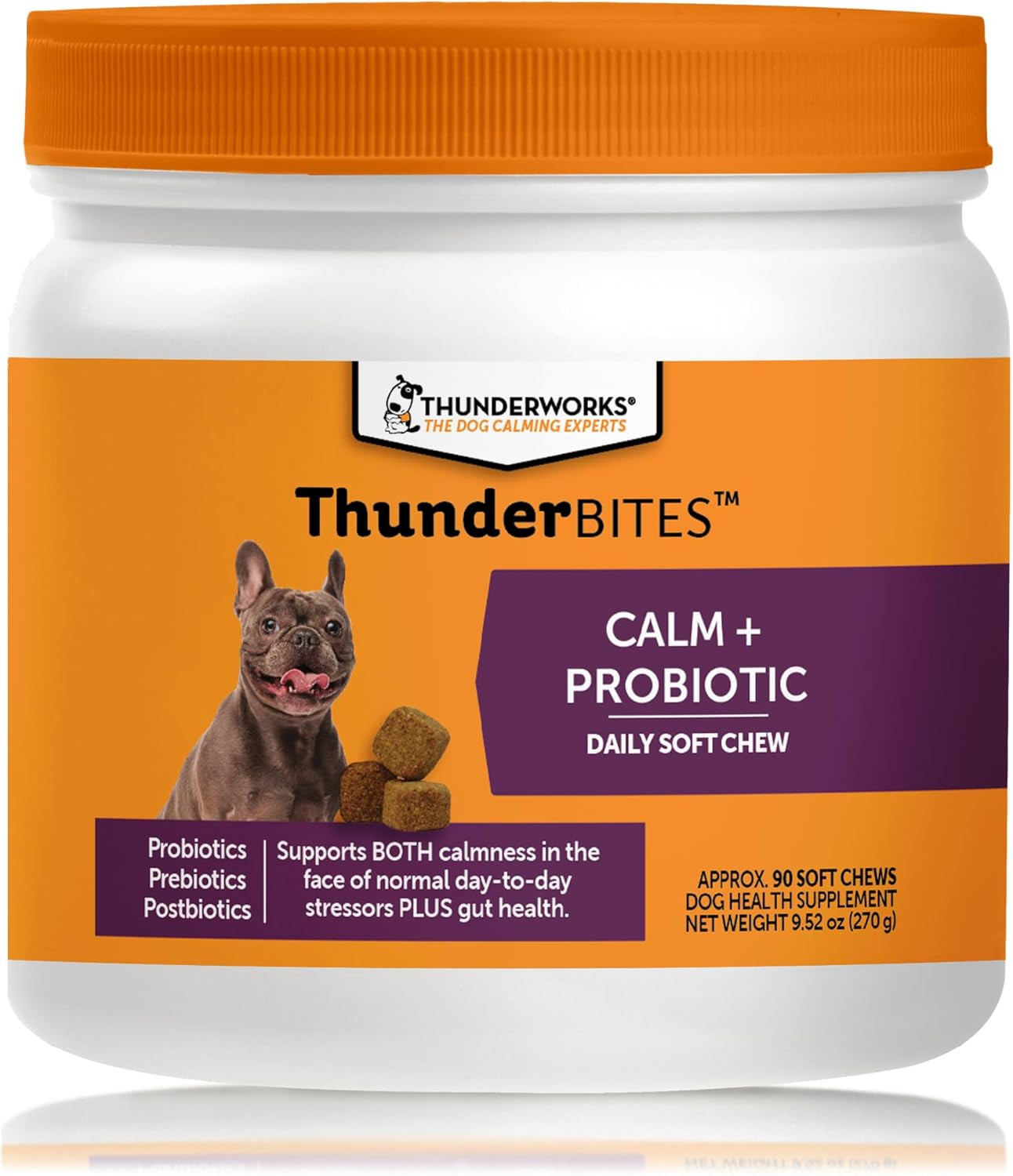
What ThunderBites actually smell like
ThunderBites Calm + Probiotics are chicken-flavored soft chews, so the dominant note when you open the jar is a mild savory, meaty scent. Alongside that, the calming and gut-health ingredients add a faint herbal or yeasty background — that is common for supplement chews and comes from things like chamomile, ginger and the probiotic/prebiotic blend rather than from anything spoiled. Whether that reads as "smells bad" is genuinely subjective: some people barely notice it, others find supplement chews a little funky compared with a plain jerky treat.
The important part is what your dog thinks, and dogs and humans do not rank smells the same way. A savory chew that seems oddly herbal to you is often perfectly acceptable to a dog. We are not aware of any consistent evidence that these chews are widely rejected on smell alone. Palatability varies dog to dog, so the honest answer is: most dogs take them readily, and some are put off — often more by novelty than by odor.
| What you notice | Likely cause | Is it a problem? | What to do |
|---|---|---|---|
| Mild chicken / savory smell | Chicken flavoring, the intended profile | No | Nothing — this is normal |
| Faint herbal / yeasty background | Chamomile, ginger, probiotic blend | No, common in supplement chews | Keep the jar sealed between uses |
| Sour, rancid or "off" smell | Possible spoilage, heat or moisture | Yes | Stop use, check expiry, contact seller |
| Dog sniffs and walks away | Usually caution about a new item | Not necessarily | Try the tactics below before giving up |
Will my picky dog actually eat them?
There is no guarantee for any one dog, but the format works in your favor. Soft, meaty chews are one of the easier ways to give a daily supplement, because most dogs accept a flavored chew far more readily than a capsule, tablet or powder. The chews are soft enough to break or crumble, which matters for small dogs and for finicky eaters.
Follow the manufacturer's weight-based amount rather than guessing, and confirm the current label since manufacturers update it. Introduce the chew as you would any new treat — on its own, when your dog is a little hungry, not buried in a full bowl the first time. Plenty of dogs take them straight away; if yours is in the cautious minority, the next section covers what actually helps.
Related: -ThunderBites probiotic vs regular calming chews which better
If your dog refuses: tactics that usually work
A first-day refusal is common and rarely means the product is a dead end. Work down this list — simplest first — giving each approach a few days before moving on:
- Hand-feed it. Offer the chew from your hand rather than dropping it in a bowl. Many dogs take food more readily when it comes directly from you.
- Crumble it into a favorite food. Break the soft chew into small pieces and mix it through a spoonful of wet food, plain yogurt or a topper the dog already loves. This is the single most reliable trick for supplement chews.
- Warm it slightly. A few seconds of gentle warmth (in your hand, or briefly near — not in — a heat source) releases more aroma and can make a chew more tempting. Never microwave it hot; let it cool to lukewarm.
- Pair it with a topper. A small drizzle of low-sodium bone broth, a lick of peanut butter (xylitol-free) or a favorite treat given alongside can bridge the gap.
- Introduce it gradually. For very suspicious dogs, offer a tiny piece the first day and build up over several days so the chew becomes familiar rather than novel.
- Give it before a meal. A slightly hungry dog is a less picky dog. Offer the chew a little before regular feeding, not right after.
When refusal means try a different format. If your dog still won't take it after a week of these steps — or spits it out, drools, or acts nauseated afterward — that is your signal to stop forcing this chew. Some dogs simply do better with a powder mixed into food, a liquid, or a different flavor profile entirely. There is no reward for persisting with a format your dog clearly dislikes, and a supplement only helps if it is actually eaten consistently. Talk to your vet about an alternative, and rule out any underlying reason a dog is off its food.
Related: -ThunderBites chews for small breed dogs with anxiety
Do they lose appeal after weeks of daily dosing?
Calming and probiotic supplements are judged over weeks, not days — general guidance is to stay consistent for several weeks before deciding whether a product is doing anything, so keeping your dog interested matters. A soft, chicken-flavored chew tends to hold appeal better than a hard biscuit, and most dogs settle into a daily routine without much fuss.
To keep the chews fresh and appealing, reseal the jar tightly after each use and store it somewhere cool and dry, away from heat and humidity. If a chew ever smells sour or looks or feels different from normal, don't use it — check the expiration date and reach out to the seller. If your dog's enthusiasm drops off over time, rotate back through the tactics above (hand-feeding, crumbling into food) rather than assuming the product has "gone bad."
If daily anxiety is the reason you're considering these, a chicken-flavored soft chew is one of the more accepted formats to try — and the tips above give a picky dog every chance to accept it before you rule it out.