Why this is a daily supplement, not a pre-departure pill
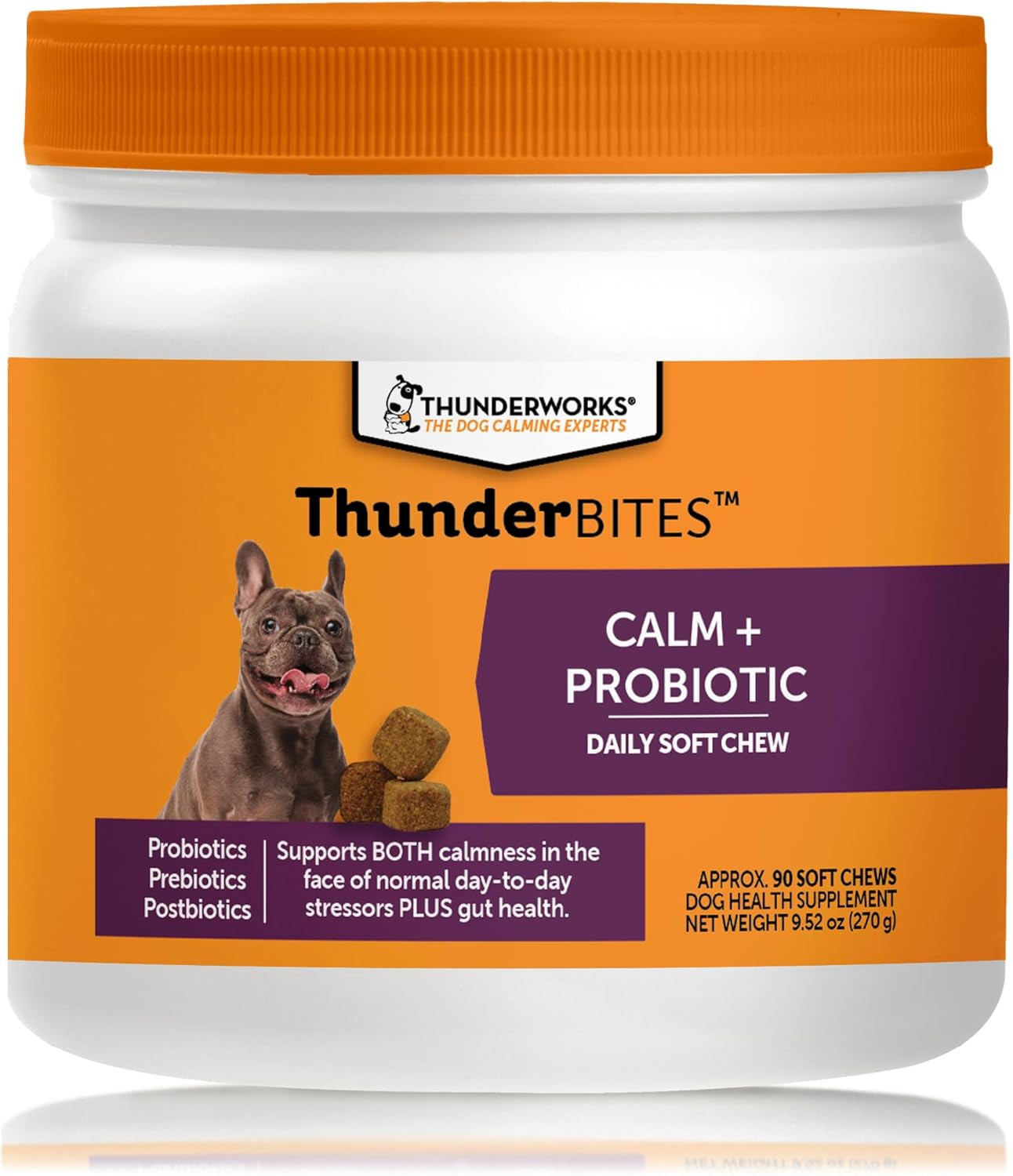
The most common mistake with separation anxiety is treating a calming chew like a fast-acting sedative you give only on the way out the door. ThunderBites is built as a daily supplement, and that is how it is meant to work here. Its calming actives — ashwagandha, L-theanine, L-tryptophan, melatonin and thiamine (vitamin B1), rounded out with ginger and chamomile — are aimed at nudging baseline stress down over time rather than knocking a dog out in the moment. The formula also carries probiotics (around 6 billion CFU) for gut support.
Give it every day, at a consistent time, and judge results over weeks. Calming supplements of this type generally take about two to three weeks of steady daily use before you can fairly say whether they help. So the honest expectation is a gradually calmer dog, not an on/off switch tied to a single departure.
Dosing by weight
| Dog weight | Chews per day | Minimum age | Notes |
|---|---|---|---|
| Up to 25 lb | 1 | 12 weeks | Give daily, same time each day |
| 26–50 lb | 2 | 12 weeks | Split with meals if your dog has a sensitive stomach |
| 51–75 lb | 3 | 12 weeks | Confirm with your vet if on other meds |
| 76–100 lb | 4 | 12 weeks | Store the jar out of reach; dogs like the taste |
This follows the manufacturer's weight chart. If your dog is on other medication or has a health condition, clear the supplement with your vet first — melatonin and some of these botanicals can interact with prescriptions.
The behavior plan the chew is meant to support
Veterinary guidance is consistent on one point: separation anxiety is resolved by teaching a dog that being alone is safe, and a supplement cannot do that on its own. It can lower the background stress that makes training harder, which is genuinely useful, but the training is the actual fix. Here is the core of what behaviorists recommend.
Gradual absence training. Work below your dog's panic threshold. Start with departures so short the dog stays calm — sometimes just stepping out and coming back in seconds — then extend the time only as the dog stays relaxed. The goal is that your absence never becomes linked to panic. Going too fast, too soon is the most common reason home programs stall.
Desensitize your departure cues. Dogs learn the routine that predicts you leaving: keys, shoes, coat, the jingle at the door. Practice those cues without actually leaving — pick up your keys and sit back down, put your coat on and make coffee — until they stop triggering a stress spike.
Build a safe space. Give your dog one comfortable spot associated with calm and good things: a bed or a crate the dog already likes (never one it fears), away from the front door if possible, with familiar bedding.
Enrichment around departures. Hand out a long-lasting chew, a stuffed food toy, or a puzzle feeder right as you leave, so alone-time starts with something absorbing and positive rather than the sound of the door closing. A short walk before you go to take the edge off helps some dogs too.
Related: -ThunderBites probiotic vs regular calming chews which better
What the chew adds — and when to escalate
Used alongside that plan, a daily calming chew has a modest, supporting job: take the edge off baseline stress so your dog can actually learn during absence training instead of flooding with panic. Think of it as making the training more workable, not as the treatment itself. Alongside it, watch for the ordinary caveats of any supplement — the occasional mild stomach upset, and no doubling up on doses.
Escalate to a vet or a qualified veterinary behaviorist if your dog panics within minutes of being alone, injures itself trying to escape, destroys doors or crates, house-soils only when alone, or simply does not improve after a few weeks of consistent training plus a calming supplement. Severe separation anxiety is a recognized clinical problem, and vets sometimes prescribe daily medication such as fluoxetine or clomipramine. Those are used together with behavior modification, not as a shortcut around it. There is no shame in reaching for professional help early — for a truly panicked dog it is the kindest and fastest route.
Related: -ThunderBites chews for small breed dogs with anxiety